Iste perfecit opus

In Browning’s “Fra Lippo Lippi,” the artist who narrates the poem asks us to consider a painting filled to the margins with brilliantly illuminated images of men and women, every one of them as singularly alive as it’s possible for a human creator to make. Among all of those, one will bear a caption: Iste perfecit opus, “This man made the work.”

Browning read those words as the credo of the kind of artist who mines his way through the material of any world that comes to his hand. The credo’s key word is the one that guides Fra Lippo’s kind of art-labor: the adverb intensely.

                                        This world’s no blot for us,
Nor blank; it means intensely, and means good:
To find its meaning is my meat and drink.
.
,
Intensely through the course of his career, Donald Trump has often made it known that he’d like to see a new colossus blasted into the granite of Mount Rushmore, in addition to or instead of the existing four. This would be, obviously, the one depicting himself. However, the analysis of John Branch and Jeremy White concludes that that desire won’t be fulfilled. Geology prohibits it.
.
To an ordinary artist, that would count as a rejection. But an artist possessed by intensity will resculpt rejection into a constructive consolation. Properly, a labor that is intense will be powered by nothing but biology. It will transcend human tools, even the power drills and dynamite that Gutzon Borglum used when he subjugated the granite of Mount Rushmore to fame. After all, even that fame was a limited one, incomprehensible beyond the limits of a single nation’s history. Its scope was physically ambitious but deficient in desire. But the moment when desire understands that what it desires is only desire itself – desire unfulfillable because unending and unending because illimitable – the limiting specifics of its implements will cease to matter.
.

After all, the implements might be a mere chisel, a mere paintbrush, a mere pen. How much work has been done with those!

Or, for another mere instance:
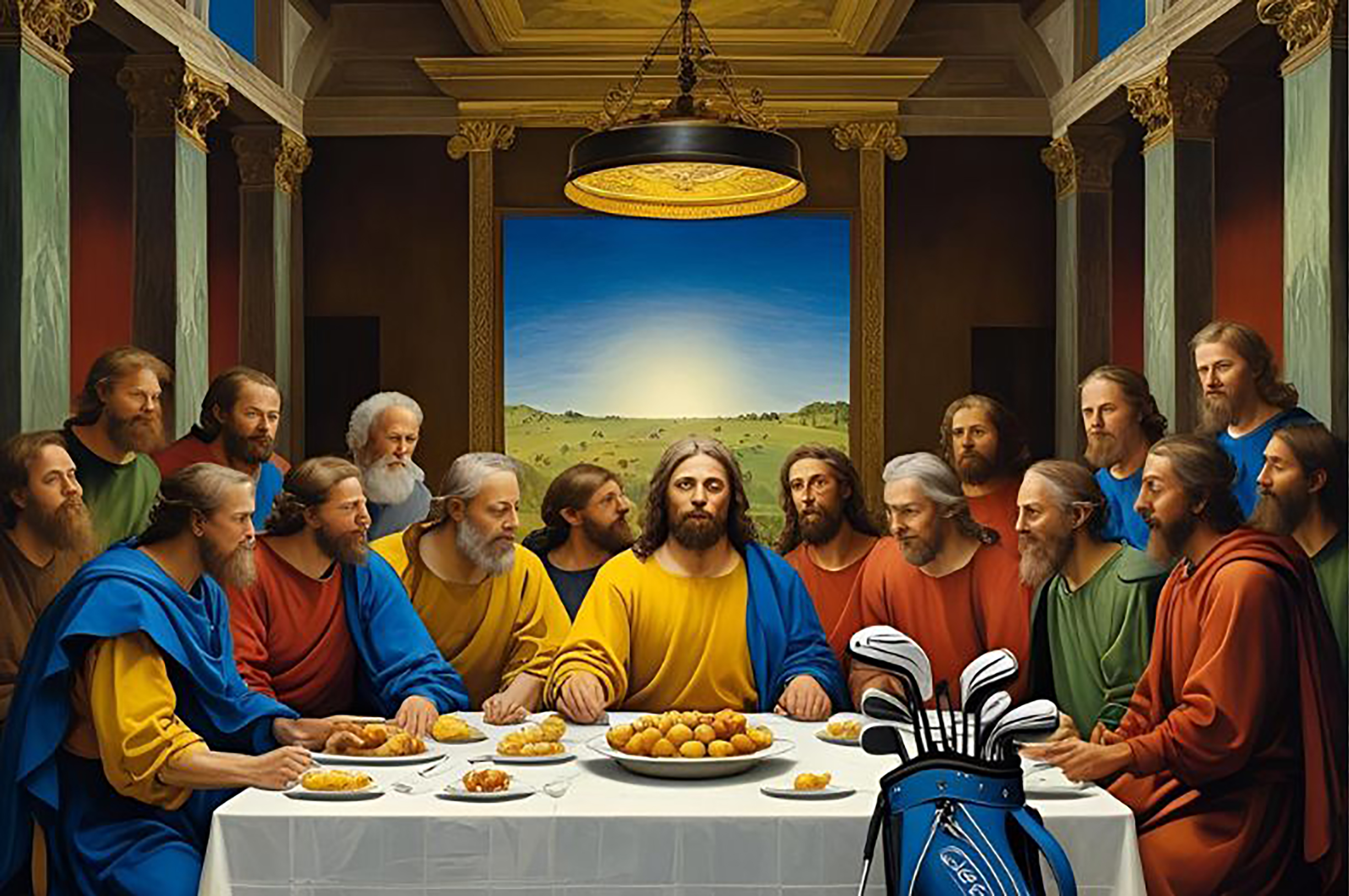
John Branch and Jeremy White, “Should (or Could) Trump Be Added to Mount Rushmore?” New York Times, June 27, 2025

Smash forever: a note on the conservatism of Left language

In current (February 2024) Left discourse, a popular utterance, rising into the air amid waving banners, is, “Smash Zionism!” But an odd thing about the utterers marching with their flags is that their word smash, the verb that says what they think they mean, is much older than they know. I first encountered it myself more than fifty years ago, on a college campus where some very old professors from the days of CPUSA had organized a congregation of the Progressive Labor Party and were using it to teach the young the hymns of their youth. Just then they were abstractly exhorting us all to smash racism, but you can imagine Hegel being equally abstract long before that time and place — say, silently in 1927, before the screen in a German movie theater.

In any case, the marchers don’t seem to be any closer to their arrival now than they were then. Their metaphor remains in the future tense. It seems to want to be in the imperative mode there, but over the bullhorns it sounds more like a jussive: “You guys! Let’s smash!”

And likewise with the yo ho ho Treasure Island jollity of “Hands off Gaza.” When, o human reader, was the last time you yourself ever said “Hands off”? Can you even imagine how your voice would sound to yourself in its moment of utterance? It could be only one part of a uniform roar, with all the separate words blurred by the loud.

But here’s a literary history that may help with the speech problem.  Its data were compiled many decades ago, words and wardrobe and all. Its original beneficiary, Nabokov’s exiled T. P. Pnin, is here to be discovered before another movie screen — this one, however, in an American classroom far from the home that he will never see again.

Vladimir Nabokov, Pnin (1957)

You can fill in the part after the hyphen yourself. Professor Pnin, the last speaker of his lost language, was weeping for Ruki proch, which translates to “Hands off.” It isn’t a phrase he was ever taught to understand. He is one of those on whose language hands were laid.

Under the same hands today, the hand metaphor is no longer a matter of language but a body function. Its hymnody isn’t composed for words on a banner but for an electronic simulation of horned bulls. The bulls bellow by the codes of machine learning. Horns held in their still human hands, they now rush through the chutes they have built for themselves to the abattoirs.

A history of my 1970s experience with smash is available at https://jonathanmorse.blog/2014/01/08/political-history-book-song-anecdote/

What lasts: an atlas of culture

In the 1920s, when Indiana was under the political control of the Ku Klux Klan, the Hoosier bard James Whitcomb Riley’s home town of Greenfield was one of the “sunset towns”: towns where no black person could safely be after dark.

In 1964 and ’65, when I resided in Greenfield (“lived” would be the wrong word), it was linguistically different from Indianapolis, just a few miles to the west. In Greenfield coffee was served in a two-syllable coo-up, what swam in water was a feesh, and if your car got stuck you’d have to give it a poosh. Also, at the time in Greenfield, everybody had to count their change after every purchase, because if they didn’t they’d be shorted every time.

Fifty-six years afterward, the New York Times reports this.


And Greenfield, here’s your money shot.

Doc2

Edit needed: two missing words

img20200318_11440880

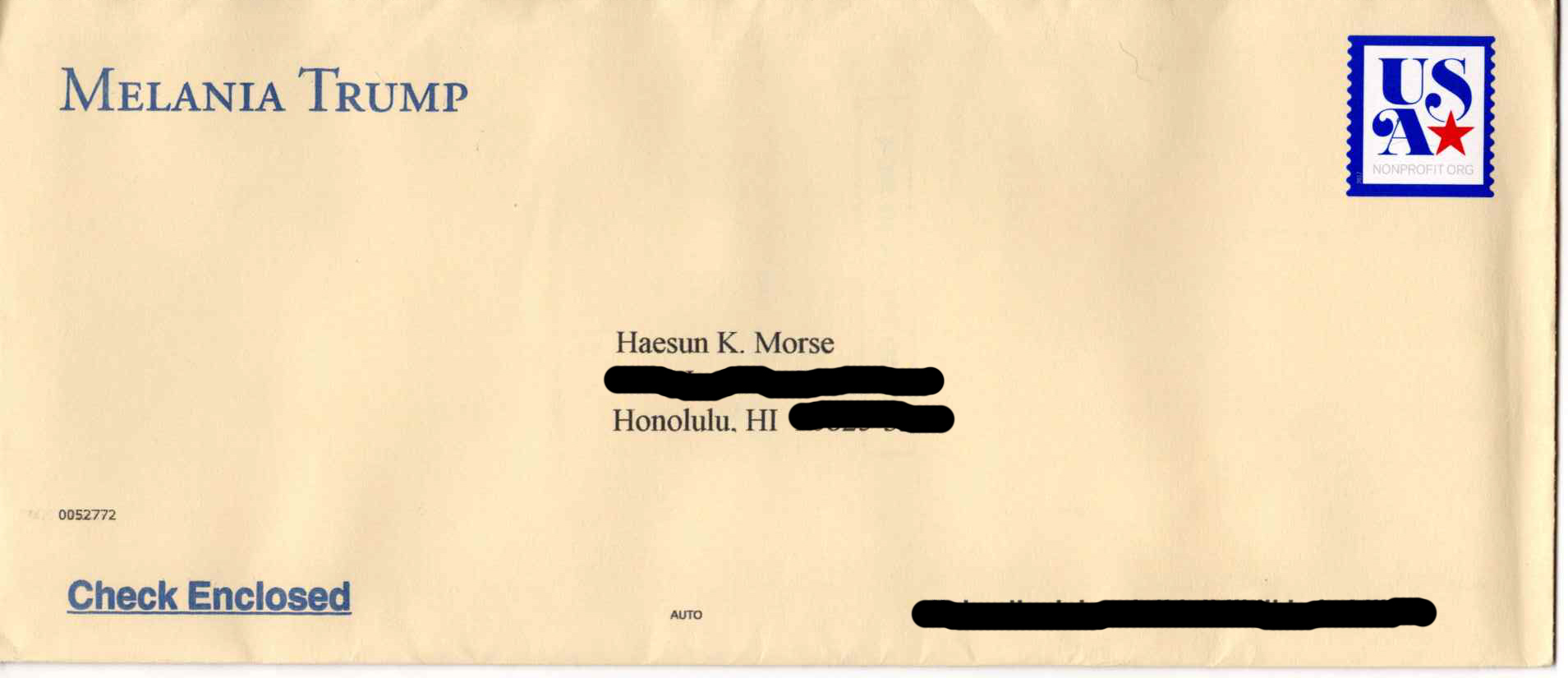
After you open the envelope, you learn that the missing words are “request” and “for.”

Within, at the foot of the letter of request, the font for Mrs. Trump’s signature is identical to the sawtooth felt-tip glyph generated for her husband. The letter’s text, however, in accordance with the half-whispered, breathily intimate voice of us-girls etiquette (what Stevens called “the beauty of innuendoes”), is dated “Friday Morning.” In accordance with the precept taught by Dale Carnegie’s How to Win Friends and Influence People in the 1930s and followed ever since by every coach of every sport in the United States (“Fred, we came here to play foobaw, Fred”) it also uses my wife’s first name, Haesun, as the first word of at least three sentences. Just keep addressing people by name, says Carnegie, and you’ll make the sale.

Additional note, March 20, 2020:

During the George W. Bush administration, a legal defense of the Central Intelligence Agency’s use of torture was crafted by John Yoo of the Department of Justice’s Office of Legal Counsel. In those documents, one of the rhetorical strategies was what conservative theorists call textualism. Copying and pasting a phrase here and a phrase there from a bookshelf of dictionaries, Yoo redefined the term “torture” so narrowly that the sounds generated in the agency’s torture chambers became formally inaudible to the hearing officers outside. By definitional fiat, the screams were pre-erased from any meaning comprehended by law.

If the idea of erasure should also contemplate the verbal signifier “Pay to the order of,” the words “Check enclosed” inscribed on an envelope will become an anti-significance. In general, all it will take to enroll such an anti-significance in meaning is erasure of its context. You may think that the words “Check enclosed” mean “A check is enclosed,” but to a grammarian of the anti-contextual, that only shows you don’t know your nouns from your verbs. Actually, as the grammarian will inform you, you should have ignored the enclosure and read only what was marked on the envelope. Only the envelope words “Check enclosed” were subject in the moment to the act of reading, and if they are read in that rigorous way, without regard to context, they are equally likely to signify either “A check is enclosed” or, on the other hand, “Check the enclosed.” The grammarian will be eager to explain the theory of erasure of distinction to those who have read the envelope, and her eagerness will give the lesson a social context. It will unite the grammar joke’s words with the grammar joker’s laugh, giving them a complementary intelligibility in the verbal and the human. Responding to the unspeakable yearning to understand and be in on the joke, Mrs. Trump explains with laughing assurance to my wife, “Haesun, I know you realize how much is at stake in the upcoming Presidential Election. We simply cannot let the Democrats win the White House and set the stage for them to capture total control of our government so they can enact their Big Government Socialist programs.”

Both the assurance and the laughter are warranted. Check the lady-words like “Friday Morning” and you’ll see: the stage is already set for the joke and the envelope really is empty.


Against bronze

Marlowe, of course. Caravaggio, of course. Gauguin. Rimbaud. Rilke and Brecht; Dylan Thomas and Robert Lowell; Alexander Alekhine and Robert J. Fischer; Francis Bacon and Lucian Freud. Indifferent to moral convention, some artists live as if they are beyond good and evil, and we who live by the light of their art sometimes accept their claim. We may not credit it as doctrine, but we take it in by eye. The artists’ biographies may ask us to disregard and stop reading, but we keep looking at the pictures.

Of course biography will sometimes direct us away from itself to matters of life and death. Handsome bad Byron had a weight problem throughout his short life, and if he had only lived long enough (nags biography, poking us with censorious finger) he might have developed into a double of his obese, card-playing king, George IV. A book about those later years, supplemented with additional pictures of the former poet, might disenchant. Nevertheless, Don Juan would still be standing by to dive into the biography and recover the life. Its comic rhymes would have the agility to keep meaning, nevertheless! what they sang for the first time over the tomb of their creator’s flesh. In words and music, they would be one more performance of life self-creating.

Two centuries after Byron and one month after the American presidential election of 2016, Sotheby’s posted news in France of a rarely seen painting created in the nineteenth century. The artist was the Christian allegorist James Ensor, he of the masks, and the election marked a change of aspect for the United States. What was to create the change turned out to be a rolypoly daubed orange, but Ensor had titled his composition Squelette arrêtant masques and Sotheby’s catalog took note of what it called its chromatic qualities.

http://www.sothebys.com/content/sothebys/cn/news-video/blogs/all-blogs/76-faubourg-saint-honore/2016/11/james-ensor-the-man-and-the-masks.html

By 2019, state and church in the United States were beginning to slap images of Rolypoly over the previously polychrome icons of the Christian trinity. By then too, however, the Christian masks of James Ensor had begun to receive and transmit again. As they filled with light for almost the first time since their creation in 1891, something they had concealed behind themselves began intimating itself once again against a re-illumined sky. Almost ready now to reveal itself above its Ensor-blue surface, it seems to be summoning the creatures within the image frame and us other creatures outside it to open our eyes and understand. Its name is Squelette, it wears the colorful uniform and livid mask of death, and it comes wavelength by wavelength into our lives to say that we can enter and see the full spectrum of ourselves only by unmasking.

James-Ensor-Sothebys

For on the breast of one of the masked is the image’s warning to us not to delay the unmasking: a death-symbol ace of spades, overlaid with a mask of rolypoly-color. No longer the black of pious mourning and its “sure and certain hope,” it threatens the masked with a sentence of eternity in livid terminal bronzer.