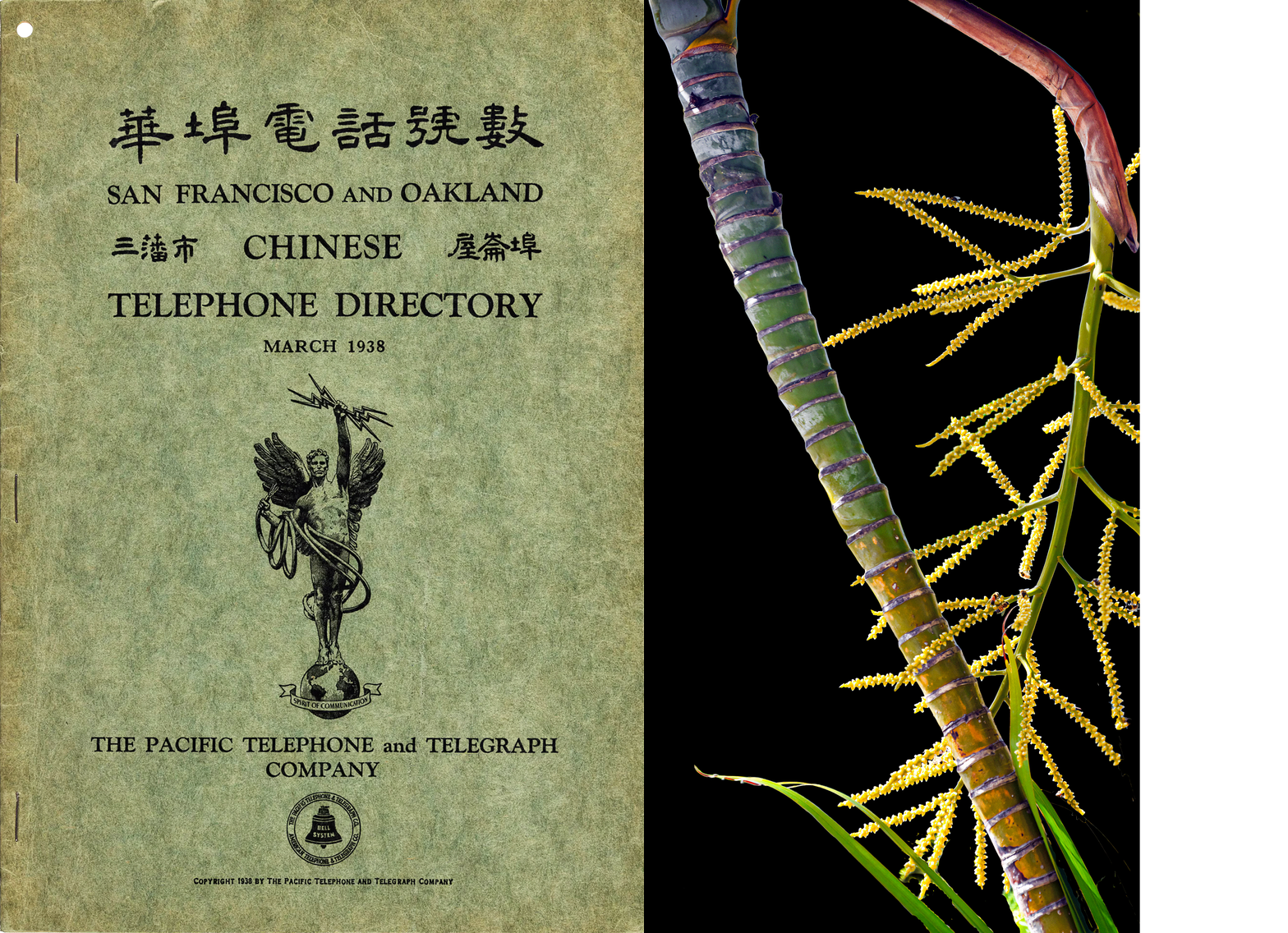
Billy Jones (William Reese Jones, 1889-1940) was a singer who specialized in cheer. A few years before he recorded this song in 1926, he formed a duo with the baritone Ernie Hare which became cheerfully famous on the radio as The Happiness Boys. But here he’s a solo tenor.
And what you’ve just heard in his high tessitura is part of the the roar of the Roaring 1920s. In the aftermath of the Great War, the timbres of sousaphones and Wagner tubas were supplemented in the air over graves by brighter, less complex sources of sonority: banjos and crash cymbals going piff! or piff piff! With so many young men dead, too, young women found themselves modified by the ecology of fashion into simulacra of boys. Here’s one instance.
,
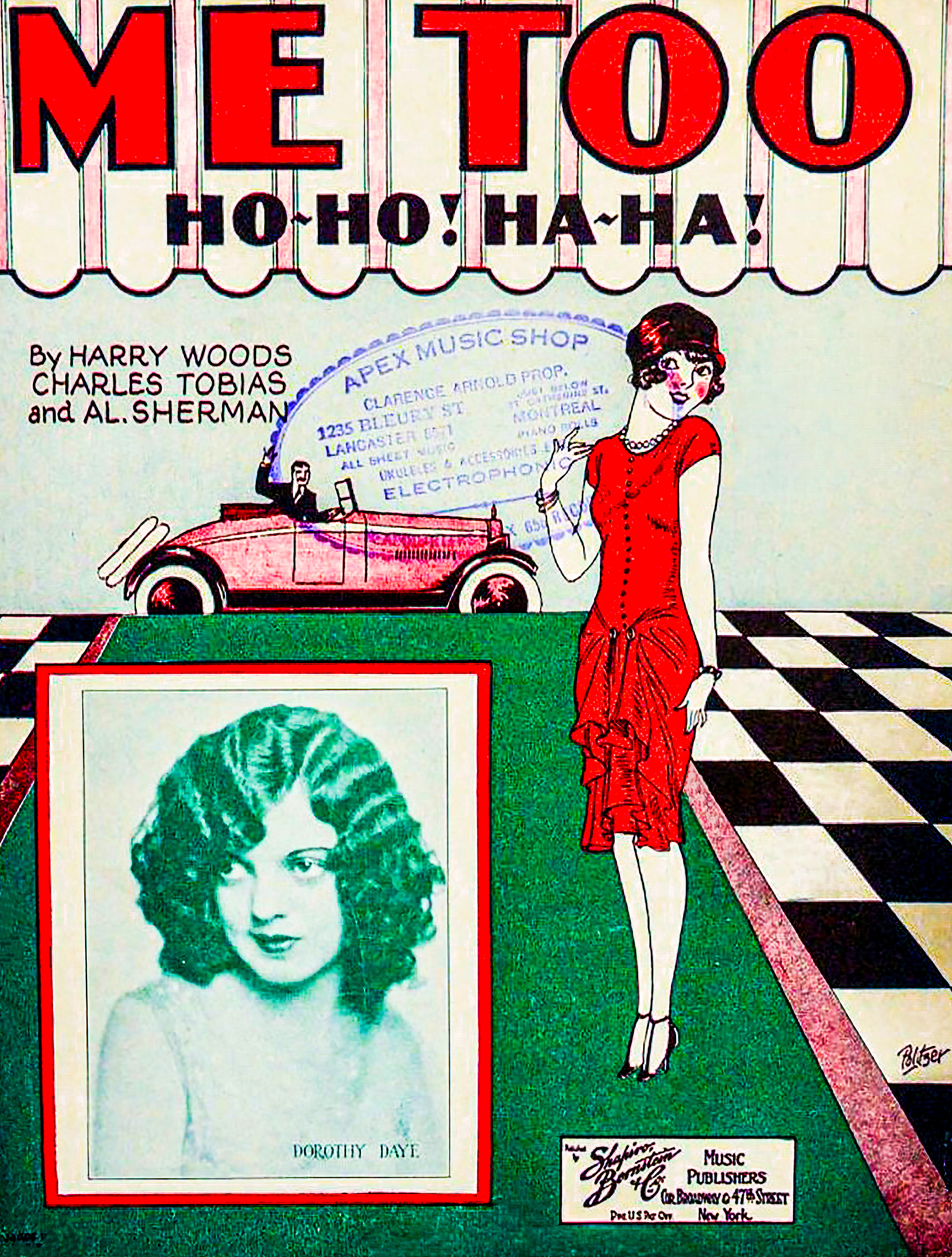
Of course you’re looking at this girl in red from a vantage of your own: a vantage in the 2020s. You yourself don’t dress that way. But if you happen to be conscious just now of a smile on your face, may one reason be that you still understand what was communicated in 1926 between an imaged man in a car and an imaged girl in a dress, holding herself tight as she looked both toward and away from that pink body with its two white spare tires?
You look different a century later, no doubt. But are you different? From your perch at the apex, look and listen down.
Image restored. Image source: Vintage Inn, https://www.vintageinn.ca/2022/04/the-beautiful-covers-of-vintage-sheet-music-from-the-1920s-part-2/