Shadow arc
The image in the Library of Congress’s George Grantham Bain Collection at http://www.loc.gov/pictures/item/ggb2004008125/ (click to enlarge) is gray.

Explaining to us what we’re supposed to be seeing, an appended afterthought of a noun phrase is crabbed and black.

But to add a verb is to add color.

And then light shines through a cloth-clad wing, a wave takes the light in and mates it with black, and a clause comes into being and teaches us to soar with M. Van den Born. Soaring, we enter a seabird’s bodily understanding of the word “above.”


(Yeats, “A Woman Young and Old”)

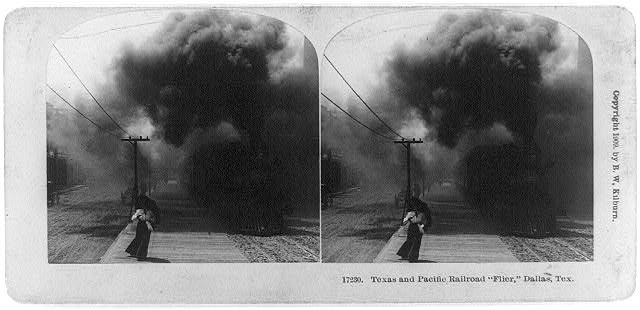


Click images to enlarge. Source of the Texas & Pacific stereograph: Library of Congress, http://www.loc.gov/pictures/item/2002716430/. Requires an anaglyphic (red and blue) stereo viewer.


Sources: U. S. National Archives, Mathew Brady Photographs of Civil War -Era Personalities and Scenes, https://www.flickr.com/photos/usnationalarchives/14277523416/in/photostream/
Library of Congress, Detroit Publishing Company Collection, http://www.loc.gov/pictures/item/det1994004795/PP/
Both images photoshopped. Click to enlarge. For information about photographs of Whitman, including other stereographs, see Ed Folsom and Ted Genoways, “‘This Heart’s Geography’s Map’: The Photographs of Walt Whitman,” http://www.vqronline.org/vqr-gallery/1880s-photographs-walt-whitman
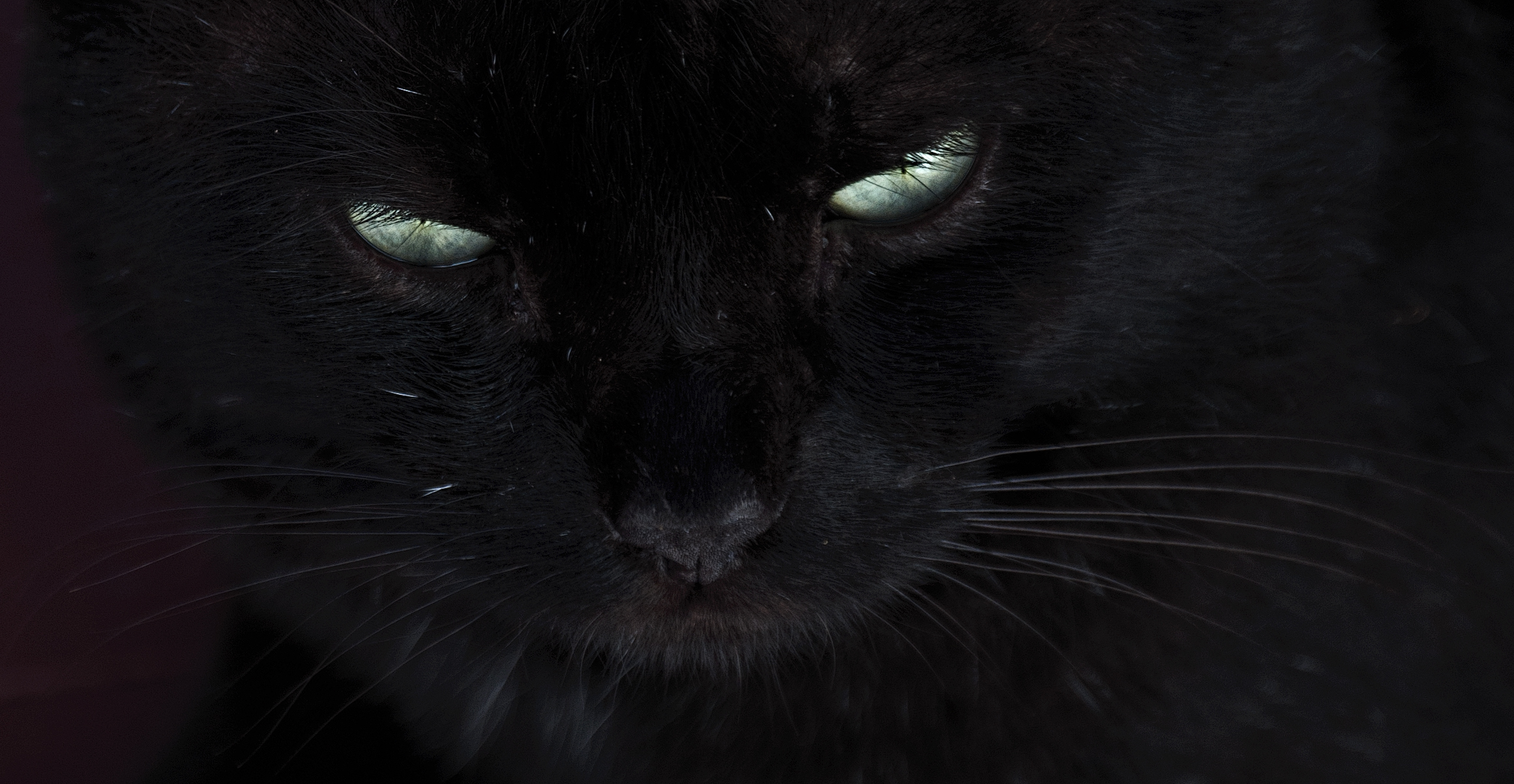
It was self-explanatory, the tag that I appended on August 23 to the new photograph on my Tumblr. Anybody who clicked on the picture would see a form and instantly associate it with mental categories named (inter al.) cat and black. But the idea of clicking is all about working the process in reverse: from the name back to the thing. So I tagged my picture (inter al.) black.
Instantly my Tumblr was hit with a like from somebody (or “somebody”) bearing a name which also turned out to be self-explanatory: “hotebonyvaginas.” Clicking on that brought up a photo album devoted to the gynecology of black women.
Six days later I posted another image of the cat, and again tagged it with the search term black. Once, again, instantly, my site was like-bombed with a collection of black porn. This time, the like function named itself “eroticafrotits.” But though the two names were different, they had been generated by only one rhetorical algorithm.
When people like me teach composition, we call attention to this particular algorithm by giving it a self-explanatory name: parallelism. Look, we say, writing an example on the board:
and that government
of the people,
by the people,
for the people
shall not perish from the earth.
After we finish writing, we draw lines between the similar parts of speech: preposition preposition preposition, one vertical line; article article article, another; noun noun noun, a third. If the words are arrayed this way in a matrix, you can see that the three lines we drew are parallel, and hence the name. It’s an ancient technology for massing words and bringing them to bear on their subject. The compilers of the Book of Proverbs used it over and over.
Let another man praise thee, and not thine own mouth;
a stranger, and not thine own lips.
The cyberbot that visited my site was one of those praising strangers. Its programmer had programmed it to do something called “liking,” and the word “like” showed up on my monitor per algorithm, then showed up again in parallel. Hotebonyvaginas, eroticafrotits: sexual adverb sexual adverb, race slang adjective race slang adjective, erogenous zone noun erogenous zone noun. The machine operates in full auto made, and, entrained in full auto mode, unhappy old men turn off Fox News and unzip.
But here’s the cat: life filled to the exclusion of everything else with nothing but movement and appetite; and black. When you’re granted a choice of elements to like, my suggestion would be that you ignore silicon and choose carbon.

Sources: Proverbs 27. 2 (King James Version); http://jonathanmorse.tumblr.com


Sources: George Grantham Bain Collection, Library of Congress, http://www.loc.gov/pictures/item/ggb2005022955/, photoshopped; and Henry Vaughan, “They are all gone into the world of light!”
A seventeenth-century sense of “glory,” new in Vaughan’s time, is “nimbus” or “aureole”: a surrounding circle of light.
(Canto XI)

is available at http://issuu.com/jonathan-morse/docs/trophies/1?e=1977878/8910632. The title is Trophies, the contents are something like a meditation piece about the photography of history, they are consists mostly pictorial, and if you want the keepsake edition on paper the link will also get you to Peecho, a print-on-demand publisher.
Tell your friends, please!
Wearing the hat that makes a frieze of her face, she turns slightly away from what she is about to do to the wrinkled body above her, raises the bottle, and . . .

Source: “Miss Elizabeth Owens christens Sikorsky plane, 5/8/25.” National Photo Company Collection, Library of Congress, http://www.loc.gov/pictures/item/npc2007013513/. Photoshopped.
