Topical reflux

Even with our eyes upcast from the ground, we’ll probably have to acknowledge, sooner or later, that we are periodically overwhelmed from low within by something brute. The evidence is in the record. Twentieth-century Anglo-American literary history, for instance, yields up a whole alluvium of anecdotes about F. R. Leavis and Delmore Schwartz. Leavis, of Cambridge, was a critic who happened not to be able to write, read, or think; Schwartz, of Harvard, was a poet whose works are vanished now except for a single short story. But no one ever recovered from a seminar with Leavis or a conversation with Schwartz, and during their lifetimes those wordy men exerted a mute musclepower.

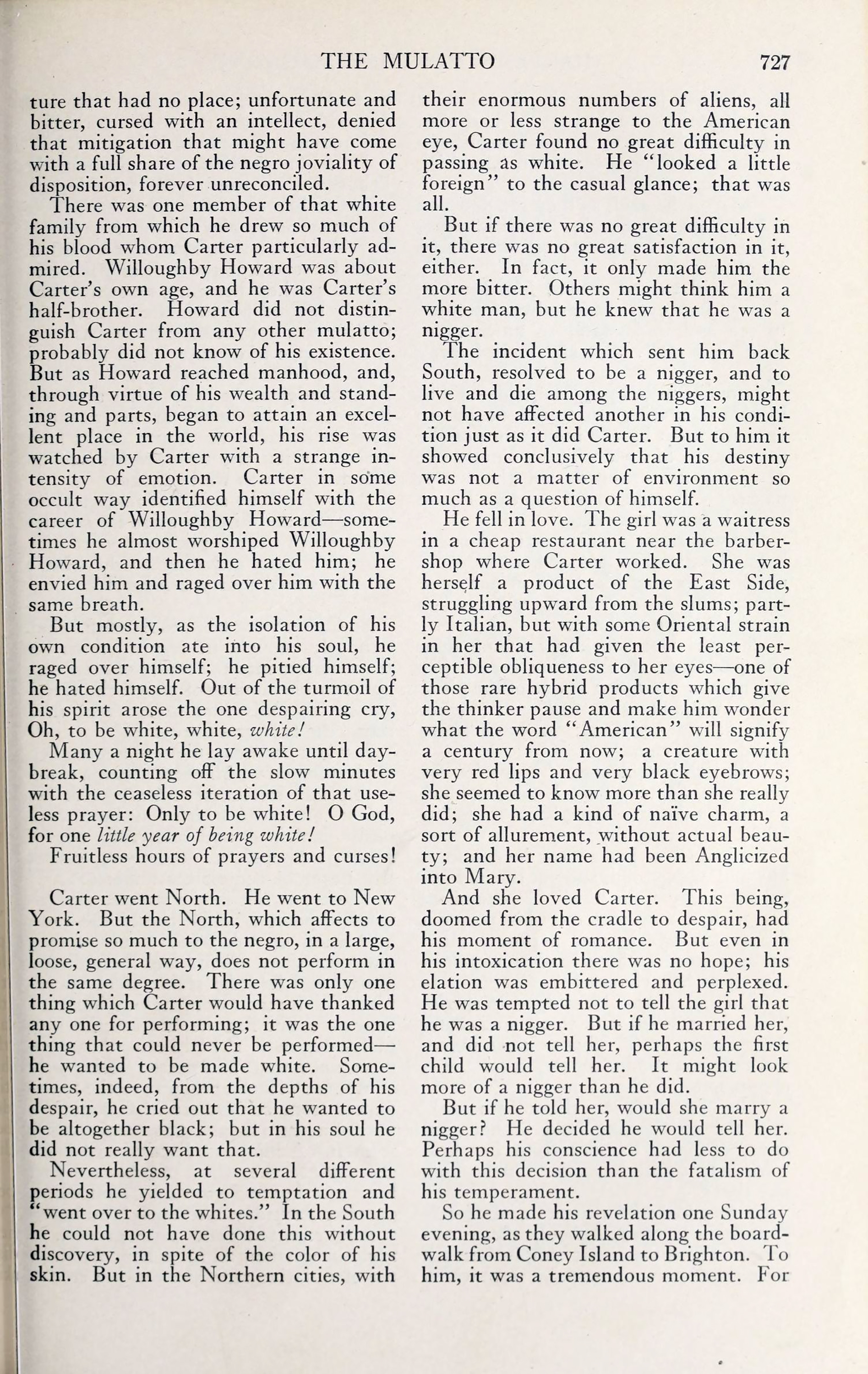
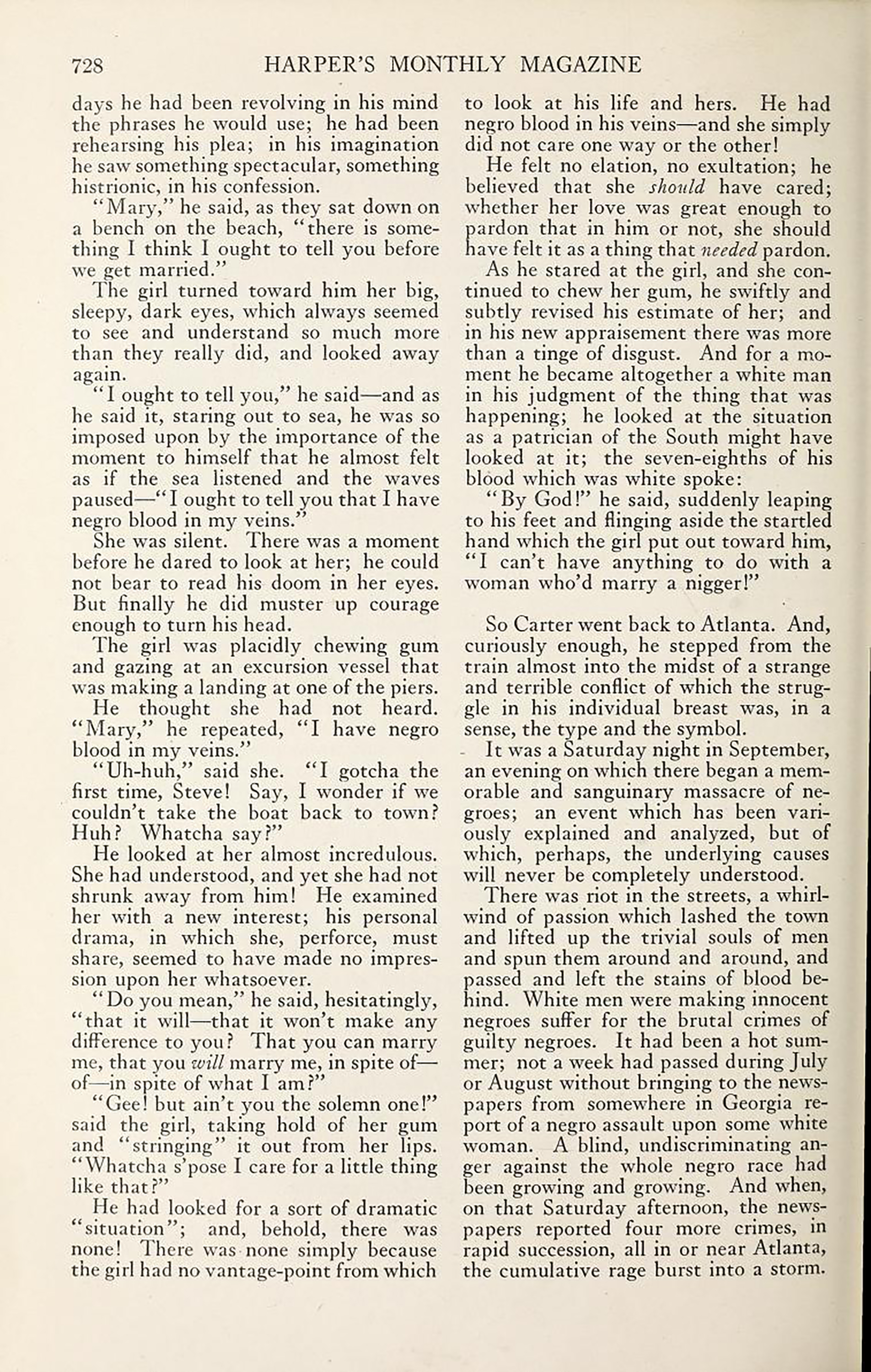
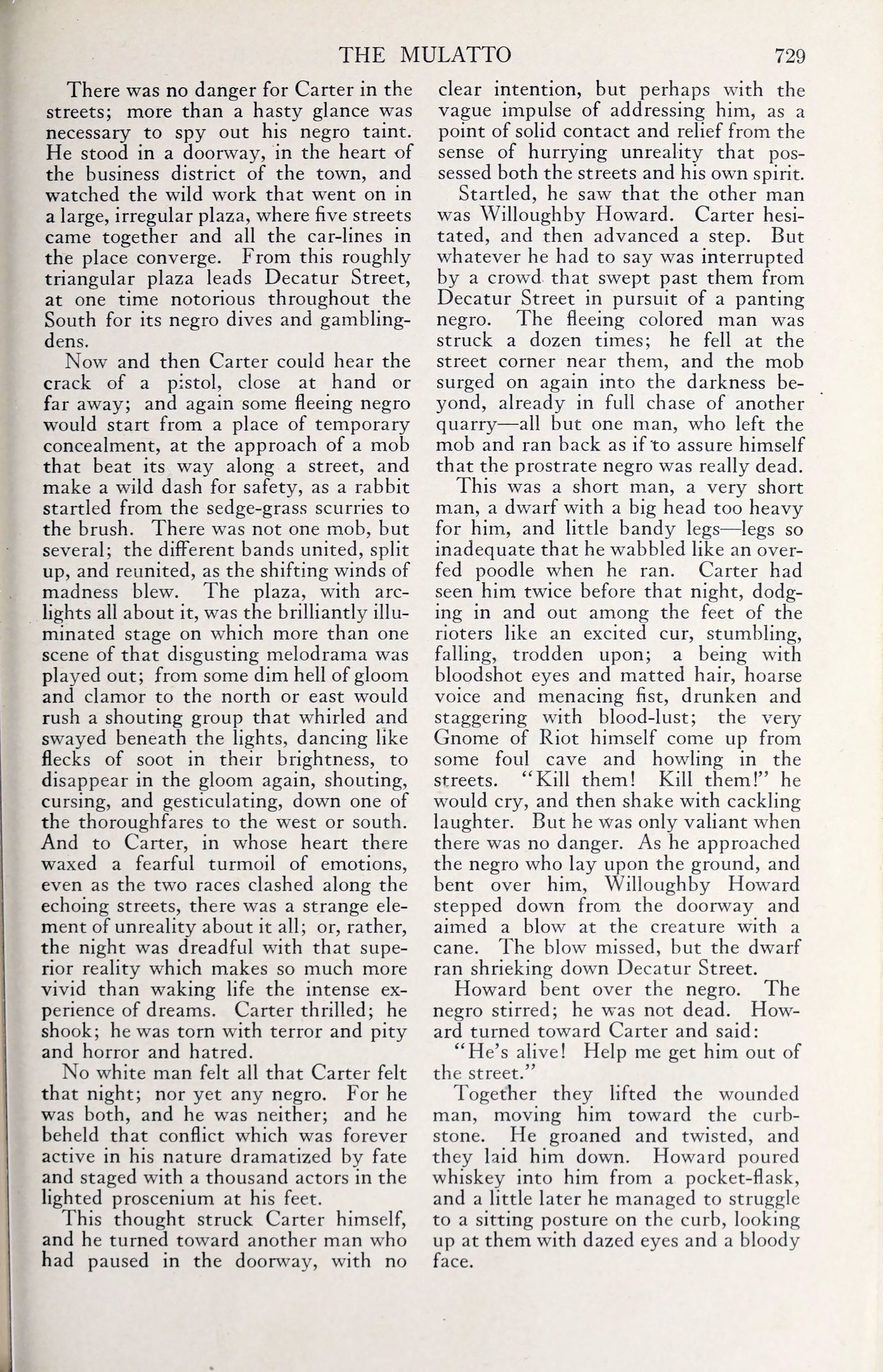
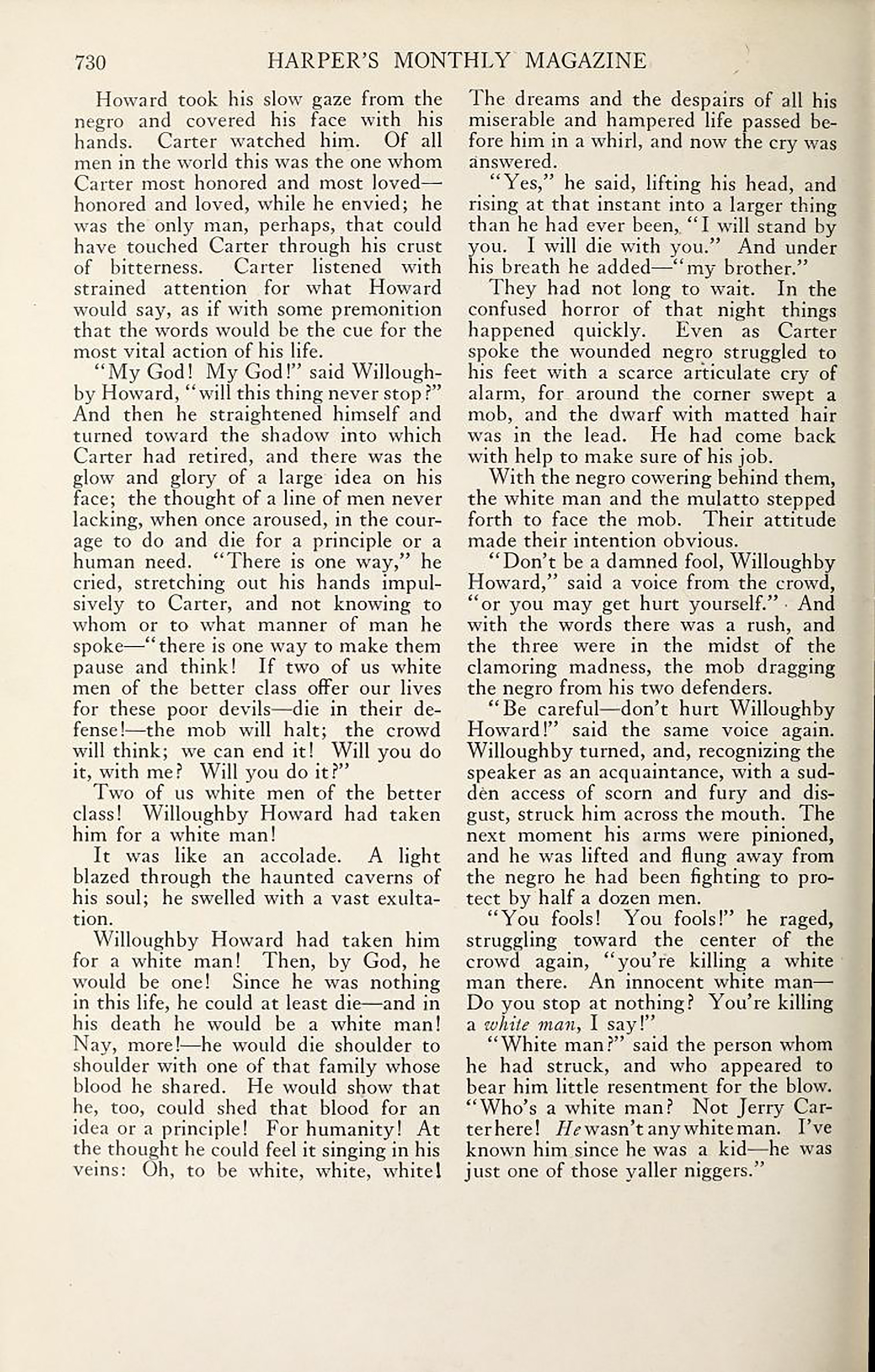
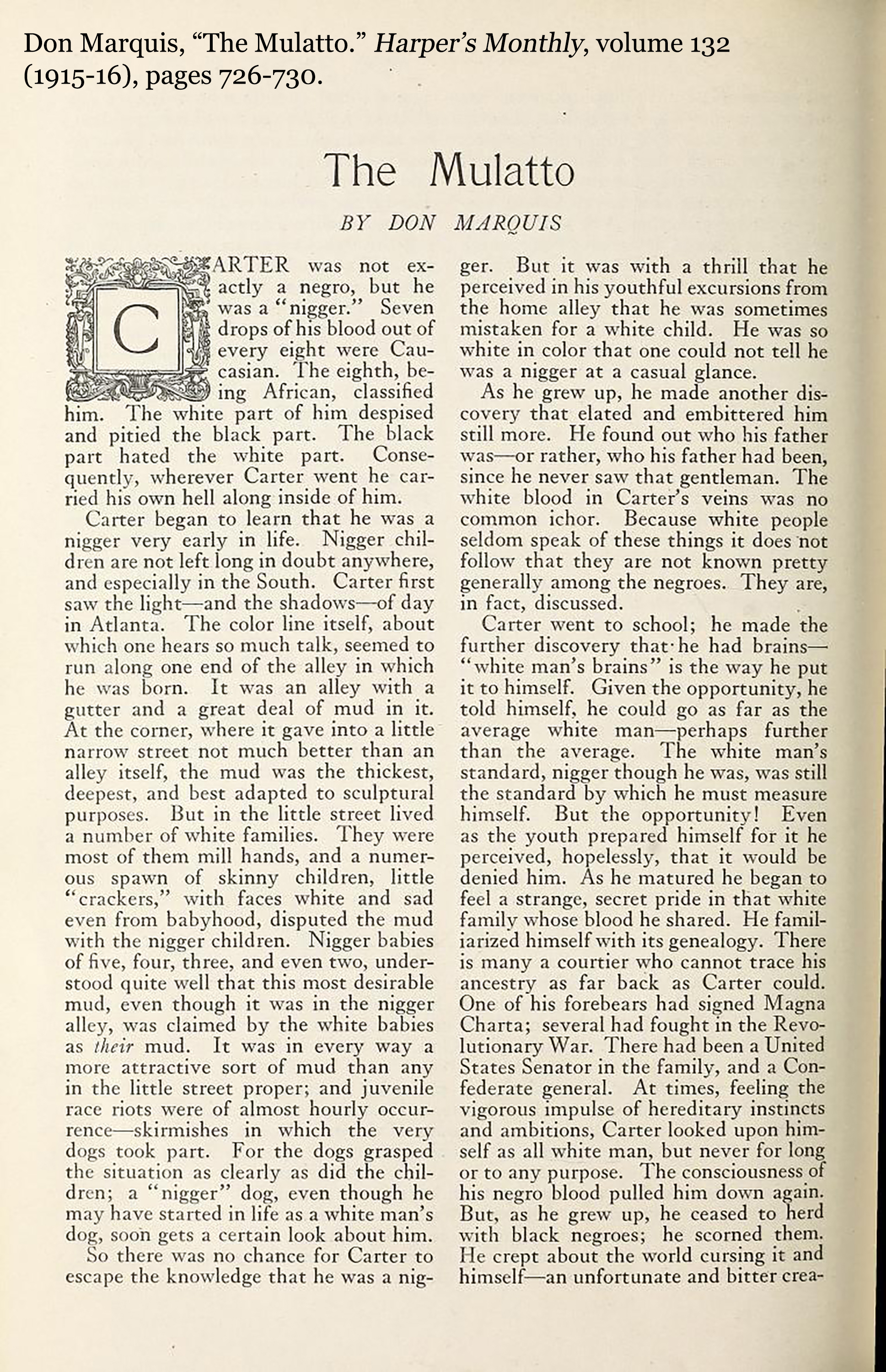
The nature of that relationship between us subordinates and those dominants has proved to be historically reversible. The century-old short story you’re about to read was forgotten long ago, and of course (you’re about to say) deservedly. Dating from the epoch of modernist literature, it never became literature itself. On the page before you it’s only old journalism: a few paragraphs on browned old paper, written in words whose developing language system moved out from under them and left them behind. But this year, see if this story doesn’t affect you in a way that seems new: new again for the first time in a century and therefore actually new. The developing language system has given you new powers and simultaneously deprived you of old ones.

During his shortened life (1878-1937), this story’s author, Don Marquis, expressed himself in genre after genre through persona after persona, but what lives on now in words is only the persona you see in fine print here: Archy the cockroach poet.

And Archy himself was later to undergo the defining final stage of his metamorphosis at the hands of a graphic artist who (unlike Marquis) had a line in modernist textuality. That was George Herriman, the creator of Krazy Kat.
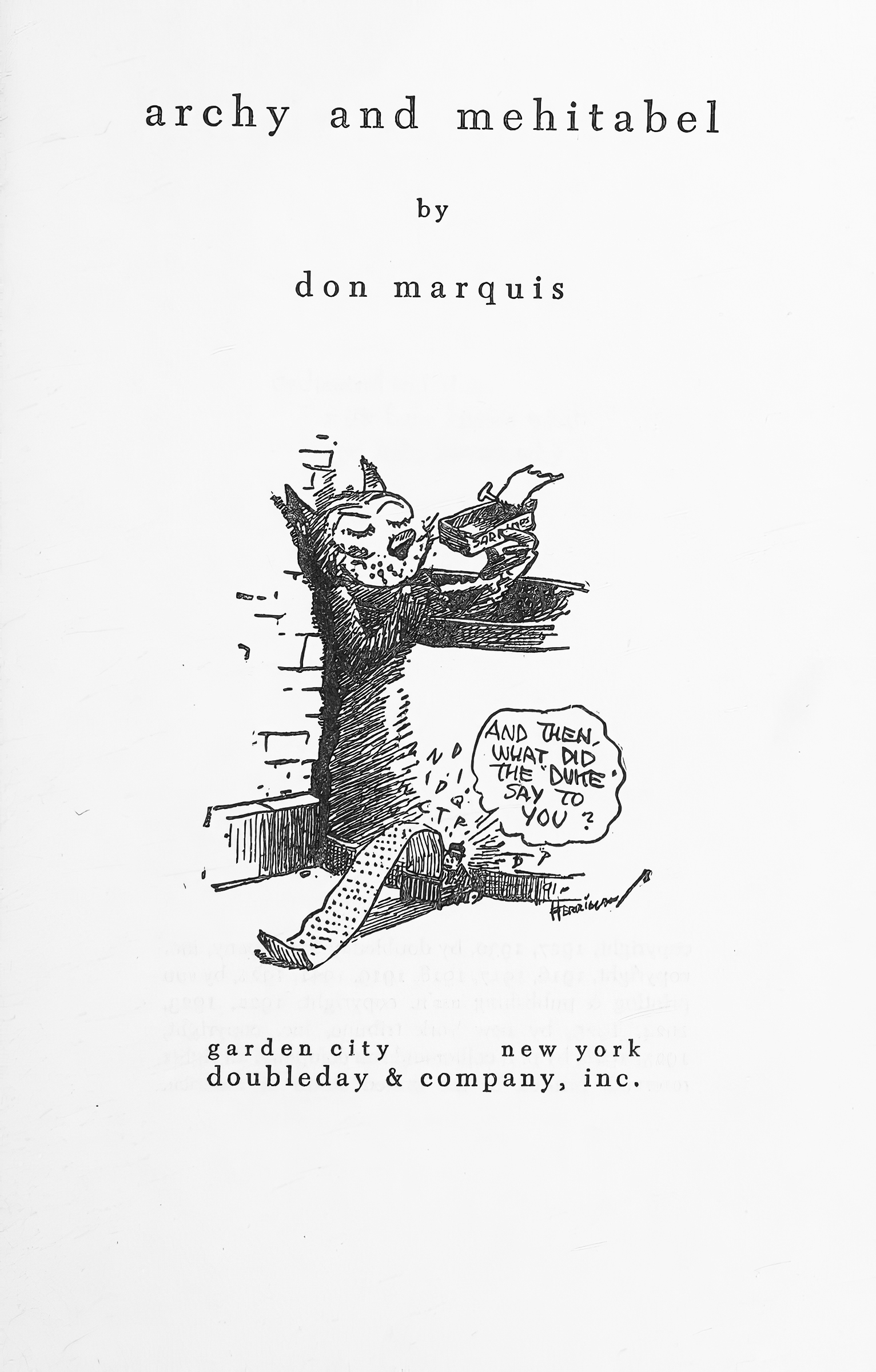
Nevertheless: because the image that you’ve just seen probably moves you, the short story that you probably haven’t really read moved you too, whether or not you knew at the moment that the transport was under way. You can test that assertion by keying it to a single probative fact:

Like the protagonist of “The Mulatto,” George Herriman was a black man who passed as white.

I wrote and bolded that sentence on May 26, 2025. If it had been written on May 26, 2024, it wouldn’t be readable now in the circa-2025 way you have just read it. Its relation to the verisimilar would be deeper-rooted. The change occurred during the interval between 2024 and 2025, when history’s personal force came rushing in an inaugural January flood between you and 2024’s older, loamier way of reading. Upwelling from undetected whiteness, it washed away some of the words you used to read with. As it came, it didn’t just dumb language down; it rooted it up and dumbed it away.

You can see for yourself how blank the page beyond Marquis and Herriman looks now. Until the white subsides, it may be all there is going to be.
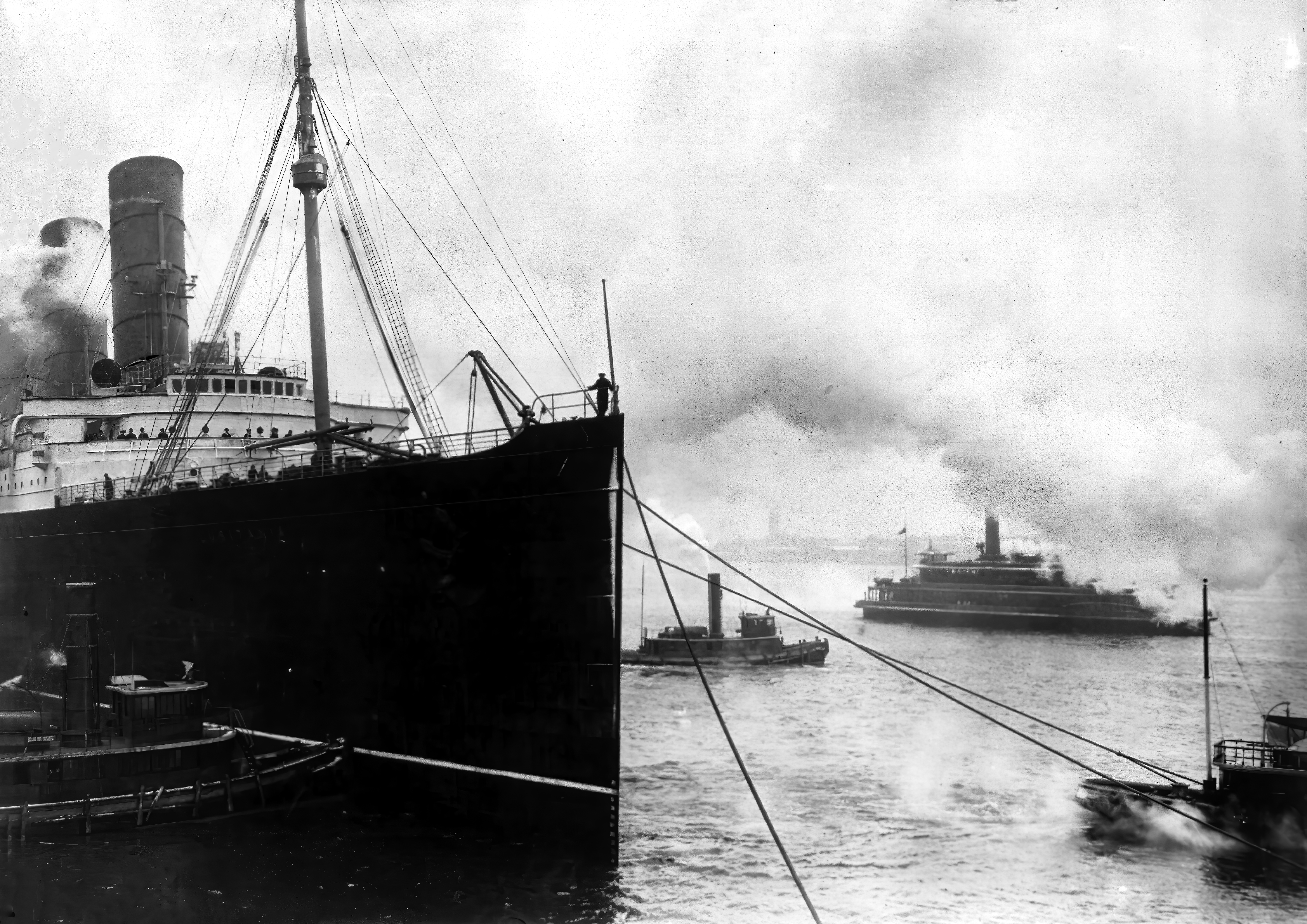
History in an era before irony. Art in an era before color.

After the World Series of 1913, the New York Giants and the Chicago White Sox boarded the first of many trains and headed west for a series of exhibition games. After they arrived in California, they kept right on rounding bases through Asia, Australia, and then Europe. In England they played a game before King George V, then boarded one last steamer for their return to the United States. It arrived in New York on the morning of March 6, 1914.

It docked two hours late, and the weather over the harbor was rainy and snowy. Nevertheless, a riverboat brought hundreds of people alongside, cheering. A photographer from the Bain News Service recorded their approach, and after that somebody scratched three words of explanation into the silent negative that survived the event. Using a photo-editing program, I’ve erased them from this print. Trying to read them on their own single term is pointless now, because “now” is the period of time extending almost all the way back to the instant of shutter release. To read the word “now” requires a supplementary history archived far from the site of anything instant.

The words that no longer mean are “Ship with fans.” Other attempts at inscribing meaning might have been made, of course: words such as “prow,” “angular,” and perhaps “geometric” or “abstract.” Two more would have to have been “white” and “black.” Think of a Mondrian shape without color. As of March 6, 1914, however, the time for such a thing hadn’t yet arrived.

But one more incision scratched into the negative cut all the way through to the time beyond 1914. Referring across a few more inches of silver halide emulsion to the word “ship,” it gave it a name bearing the colors of a future. In 1914 “ship” in plain black and white was all it needed to be. For the purposes of a news service’s lexicon in 1914, the ship was only a mode of baseball delivery. The second scratching gave “Ship” a proper name, but as of 1914 that amounted only to journalism’s who-what-where practice at its automated busywork. The name itself remained insignificant.

But in 1915 it suddenly began signifying on its own. Suddenly the ship sank below the visible surface of things; suddenly the letters on its bow and stern became unreadable; suddenly, then, they were transformed from a string of morphemes painted on metal to a meaning capable of existing anywhere. Now that they are gone into history, the metal letters are history.  Their historiography took only a few minutes to accomplish, and in its final form it is only one synecdochic word long.

Say the synecdoche. In memory, as memory, say Lusitania. Like Guernica, it will be one of the words in which some artists of the twentieth century defined a mortal passage out of time.


Sources:

Tom Clavin, “The Inside Story of Baseball’s Grand World Tour of 1914.” Smithsonian Magazine, March 21, 2014. 

“Giants Get Rousing Welcome Home.” New York Times, March 7, 1914, page 12.

[“LUSITANIA, 1907-1914 . . .”] George Grantham Bain Collection, Library of Congress. https://www.loc.gov/pictures/item/2002721377/

Iron, 1922

1.

“I saw the hardware store from across the street. I didn’t know you bought flat-irons by the pound.”


2.

The speaker will decide on two, weighing six pounds each. He is The Sound and the Fury’s Quentin Compson, and he will use his purchase to weigh down the body when he drowns himself. The date of the event, in unpunctuated lapidary uppercase, will be JUNE SECOND 1910.


3.

In 1910, customers would ordinarily have bought their irons in pairs as Quentin did. The appliances were made of cast iron, they resembled the fourth of these tokens from a 1935 Monopoly set,

and while one was in use the other would have been heating on the stove. But the metals were changing.


4.

The iron made of iron gave its metonymic name to a building erected in 1902 on a triangular lot in New York formed by the diagonal intersection of Broadway with Fifth Avenue and East 22nd Steet. In 1904, an era when photography emulated what were then called the beaux arts, Edward Steichen shaped this image.

https://www.metmuseum.org/art/collection/search/267803


5.

But compare

Color and detail restored.

See this one contra-Steichen: from top to bottom, starting with the printed date. For a year in a magazine about changing social fashions, that’s a point of origin. As of 1922, for one instance, 1922 was the year when the American novelist Sinclair Lewis published a social satire named Babbitt which by 1930 would make him the first American writer to win the Nobel Prize for literature. It’s all but forgotten now, but in 1922 its description of an evening cityscape seemed memorable. It was full of styles. But just as a matter of professional practice, Lewis didn’t build anything in 1922 that Dickens in 1852 hadn’t built with more imaginative use of material in chapter 1 of Bleak House. More, and decisively: 1922 happened to be a year when the technology of writing English entered a new stage of development. With T. S. Eliot’s The Waste Land and James Joyce’s Ulysses, a poem and a novel did to literature what the steel skeleton had done to architecture. Babbitt was to remain in the iron age. The Waste Land and Ulysses were wired for steel.

6.

In front of a high steel tower in 1922, a low steel tower moved traffic through gridded Manhattan. Entering stage right, a man in spats and a top hat came dancing through the grid. The zigs of Archie Gunn’s cartoon architecture were now ready to be seen as a jazz.

Hat : woman :: machine : machine

1

2

Le Corbusier inscribed those words in the second (1928) edition of his Toward an Architecture. The first sentence is one of the axioms of modernism. A century later, you are running your fingers over it on page 151 of John Goodman’s translation (Getty Research Institute, 2007), where it is shelved under the subtitle “Liners.”

3

Liners such as, en route shortly after the launch of Toward an Architecture:

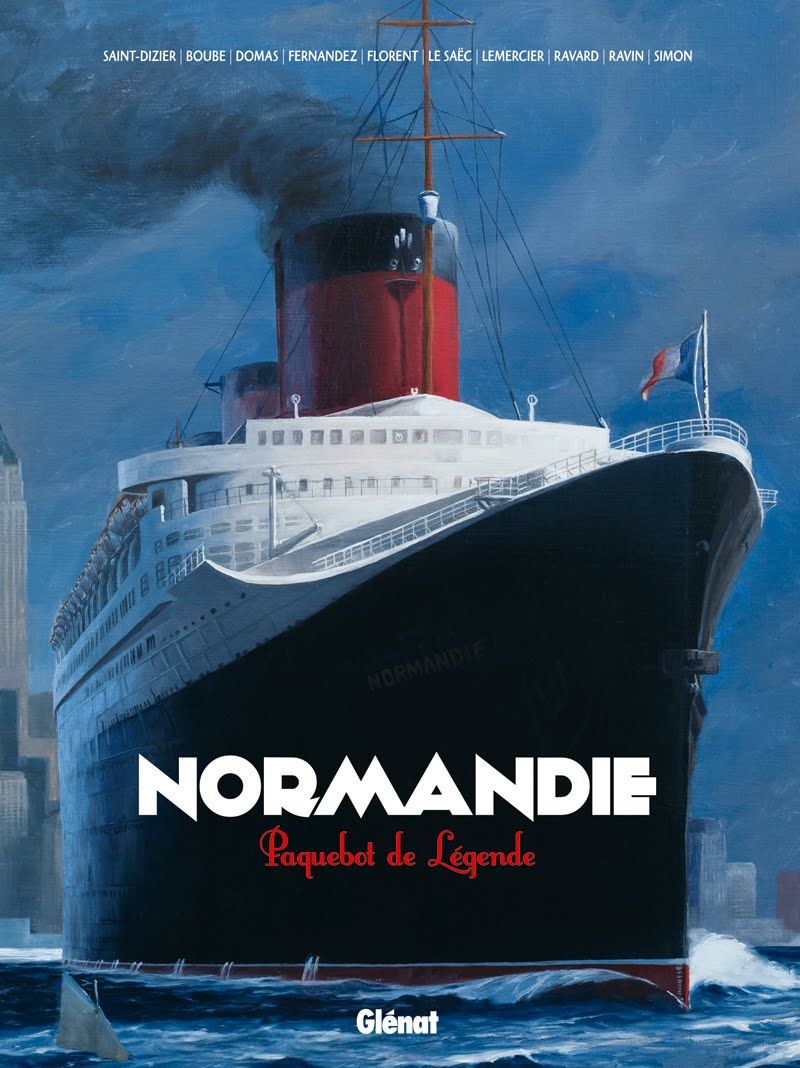
This one was shaped by the modernist aesthetic of Art Deco. Its three sleeked funnels were unequal in height from bow to stern: first tall, then medium, then short (and the short one was a decorative dummy). Viewed from the side, the pattern communicated a knowingly accepted illusion of streamlined speed. Viewed from the bow, the tall funnel allotted the ship’s proportions the way a hat allots a head’s proportions.

4

Allotting, the hat inscribed below guides the eye to see a face as a petitesse. Petitesse is a curve and the hat is its generatrix.

Also the hat’s crown rakes back in the illusion of speed while the passive woman within the hat remains still. Also the hat’s ribbon, wrapped halfway up around the domed cylinder of the crown, teaches the senses to imagine ribbon and crown as body parts harmonizing at knowingly accepted cross purposes . . .

Jacques-Henri Lartigue, stereo autochrome Bibi au Restaurant d’Eden Roc, Cap d’Antibes, May 1920.

An eye made use of an apparatus to create this image of a woman designed and curated. She’s more than a century old now but as good as new. You accept the illusion knowingly. You are a member of its comic audience. Defined by the aesthetic of Euclid, a woman is a machine for wearing a hat.

Further introduction

In the Constantin Brancusi archive at the Centre Pompidou, the image linked here is captioned “Erik Satie, John Quinn, Brancusi et Henri-Pierre Roché, golf de Fontainebleau” and dated September 25, 1923.

https://www.centrepompidou.fr/en/ressources/oeuvre/cLrbRob

Satie and Brancusi are the composer and the sculptor. History has decided on their behalf that they need no further introduction. Differing from each other as to hat and beard, they partake differently of their culture, but they occupy the hat-and-beard part of it in common. A century afterward, you too can know what they were doing with their hatted and bearded selves outside the image, and what that meant then and means now. There’s no need to ask permission; the request was made and granted before you were born.

But unless you’re a specialist, Quinn will need to be introduced. A lawyer who hated his work but made it useful to some modernist artists whose work he loved, he lives on in history honorably but secondarily, only as an annotation. Speaking not Quinn’s language but history’s, Quinn’s specialist footnote will say to us, “Quinn was one of the patrons who made James Joyce’s language possible.” It’s an explanation not worth trying to understand unless you already know James Joyce’s language.

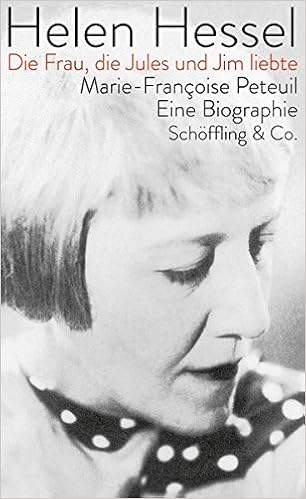
And the tall man on the right? To the extent that Henri-Pierre Roché, 1879-1959, may be known outside France, he will be probably be known as the author of Jules et Jim, ostensibly a novel with a title seen at speed as a historically famous movie’s credits roll. But in its pages offscreen, Jules et Jim is less a fiction than a fairy-autobiography: an aesthetic construction about the more or less actual Roché, the more or less actual German writer Franz Hessel, and the woman they both loved.

https://images-na.ssl-images-amazon.com/images/I/51PMFULRrhL._SX304_BO1,204,203,200_.jpg

By contrast, the words embedded in this dust jacket demonstrate that their own tale (subtitled “The Woman who Loved Jules and Jim”) isn’t a story of a more or less actual Helen Hessel (“Helen, die Frau”) but instead a story of a Helen-image projected optically onto a screen. According to that story, the words Jules und Jim printed on their paper are only indices referring statically to a picture seeming to move.

https://www.wikiwand.com/fr/Henri-Pierre_Roch%C3%A9

But of course the moving picture has a soundtrack vocabulary, and a vocabulary is a multiplex always undergoing changes of the words through which it means. Franz Hessel’s parents were Jews who converted to Lutheranism, but that change reversed itself when the time came for their son to die in a Vichy concentration camp. Conversely, you and I probably wouldn’t be reading about Henri-Pierre Roché now if François Truffaut hadn’t happened to supplement our language in consequence of picking up a copy of Jules et Jim in a second-hand bookstore (Mary Blume, “The Secret Lives of Jules and Jim,” New York Times 25 April 2003, https://www.nytimes.com/2003/04/25/style/IHT-the-secret-lives-of-jules-and-jim.html). And history can’t do a thing about any of that beyond turning up the lights in the archive, more or less at random.

But at least Photoshop is good about sliding the dimmers. So may I ask you to move to the bright side of the room for a moment and look with me at this Photoshop-renewed picture of a sex athlete standing head and shoulders above Erik Satie and Constantin Brancusi? In the image, he is in his own moment once again, and the story about the image is that when it’s annotated with words it seems to have been, just a moment ago, moving. The sense of movement will be an optical illusion, but while it lasts its Once upon a time words reverse themselves and seem to say what they once did say. Above us, once more, towers Henri-Pierre Roché in the knickered mode of 1923, and for him and for us the illusion is a word seeming to mean Now.

Note, July 21, 2022: The golf game is discussed on page 165 of Hugh Eakin’s just published Picasso’s War: How Modern Art Came to America (Crown, 2022).