Who are these coming to the sacrifice?

“Going to the night boat, Petoskey, Mich.,” 1906. Detroit Publishing Company Collection, Library of Congress, https://www.loc.gov/pictures/item/2016800038/. Restored.

At the image’s left and right margins are artifacts from 1906: a gasometer and a carbon-arc street light. Links to more from 1906 about the Lake Michigan resort town of Petoskey and its overnight steamboats to Chicago are at https://jonathanmorse.blog/2025/01/26/cloud-and-rippling-water-nineteen-six/.

And at the image’s center is a woman in a white gown, momentarily aglow in the setting sun. She is to walk through 1906 for a short time further, then lade a night boat with children. That moment is still to come. But now, while the shutter of an onshore camera lies open to receive this image of them all, the children can be seen in passage from your left to your right.

The image charts a transit. Rocked by ripples, the children will lie unmoving in their moving boat as it carries them into the night and then into the morning. Moment by moment on the boat’s bridge, the chronometer will entrain boat, lake, all. Moment by moment one night in 1906, one of the infinitely many ever afters will come to be.

Commercial appeal:

thou wast not born for death. Printed on a small surface, a poem addressed to a bird told the bird so. But then the bird entered the past tense, leaving the poem behind in the present. Said the poem to itself, silently: “Fled is that music.”

Afterward, on a large surface, these other words were printed:

“cheese-box”

Head-Phone

Watcher-of-the-Silent-Places

Quote:

Silently, on their paper, for the time that was then being, they were a promise of something not on the paper: unsilence. But they were nouns, not verbs. They were a promise that could be but not be made. Listen in again, a century later, and confirm: promised unsilence has failed to descend over the Port-of-Missing-Men. The promise’s  typographical manifestation, this decor of quotation marks and hyphens and capital letters, is a written language, not a spoken language. Just above its surface, the air is still still.

Her mother sleeked her hair, forever. She looked down, forever.

Not much history seems to have survived this remnant. It is a daguerreotype, apparently American, apparently dating from about the 1850s, and that seems to be almost all we know about it now. The Library of Congress’s catalog link at https://www.loc.gov/pictures/collection/dag/item/2014655145/ notes that the image was acquired in 2014 from a Dennis A. Waters, but Waters

( https://finedags.com/about-us/about-dennis-a-waters/ )

was a commercial dealer, not an archivist. In any case, this isn’t one of the pictures in the Library’s daguerreotype collection that are archivally identified by name and place and date. Almost all that remains to be known about it now is almost all that remains to be seen. It is almost nothing but picture. Almost nobody except a fashion historian or possibly a medical historian could articulate a word about it now. Because all the words that were once spoken over it by the people it depicts have fallen away, it has become an abstract idea of what was once flesh-round and warm to the touch.

Consider a lens, then. It seems to be a portal through which life goes into the past and brakes to a stop.

Magic casement: fabric and fur on breathing flesh, with portal into the dark

John Vachon, April 1938, “Untitled photo, possibly related to: Sharecropper and sharecropper’s dog. North Carolina.” U.S. Farm Security Administration / Office of War Information Black & White Photographs, Library of Congress, https://www.loc.gov/pictures/item/2017716964/. Contrast and detail post-processed. Don’t forget to click “Browse neighboring items by call number.” About the hole in the negative which marked an image for exclusion from the FSA collection, see Alex Q. Arbuckle, “1930s ‘Killed’ Photographs,” https://mashable.com/2016/03/26/great-depression-killed-photos/.

Academic festival: forever piping

That June morning in 1903, the rain that fell overnight had let up. The green of the leaves and their smell can still almost be sensed. The academic gowns, too, are a fashion that hasn’t changed between 1903 and now. In their photograph they drape the passage of time in black.

4a10935uaiD
“Senior parade, commencement day, University of Michigan.” Detroit Publishing Company Collection, Library of Congress, https://www.loc.gov/pictures/item/2016803248/. Post-processed for contrast and detail.

But at some time between 1903 and now there occurred a break in the photograph’s glass negative, and when we look through the break we see nothing. What remains unbroken in the image is what photographers two or three decades years earlier would have called an instantaneous. By 1903, however, advances in photographic technology had made that noun (“the name of a person, place, or thing”) redundant. By 1903, everything seen could be seen at will to be in passage, instant by instant. It no longer had to be anything nameable. Whatever it was as it passed, it passed into oblivion. The function of the instantaneous shutter could now be seen to be a breaking off.

But in the part where the glass was unbroken, the passage across the glass could also be imagined as a returning with the seasons, passing away but recurring like rain on sidewalks or sun warming black gowns. And yes, you see: the piper who played io paean is still playing. Motion-blurred in his image against sharply focused ashlar and bark, right foot down and left foot up, he dances away (at least for now) from the break.

4a10935uaiF5


Abolish

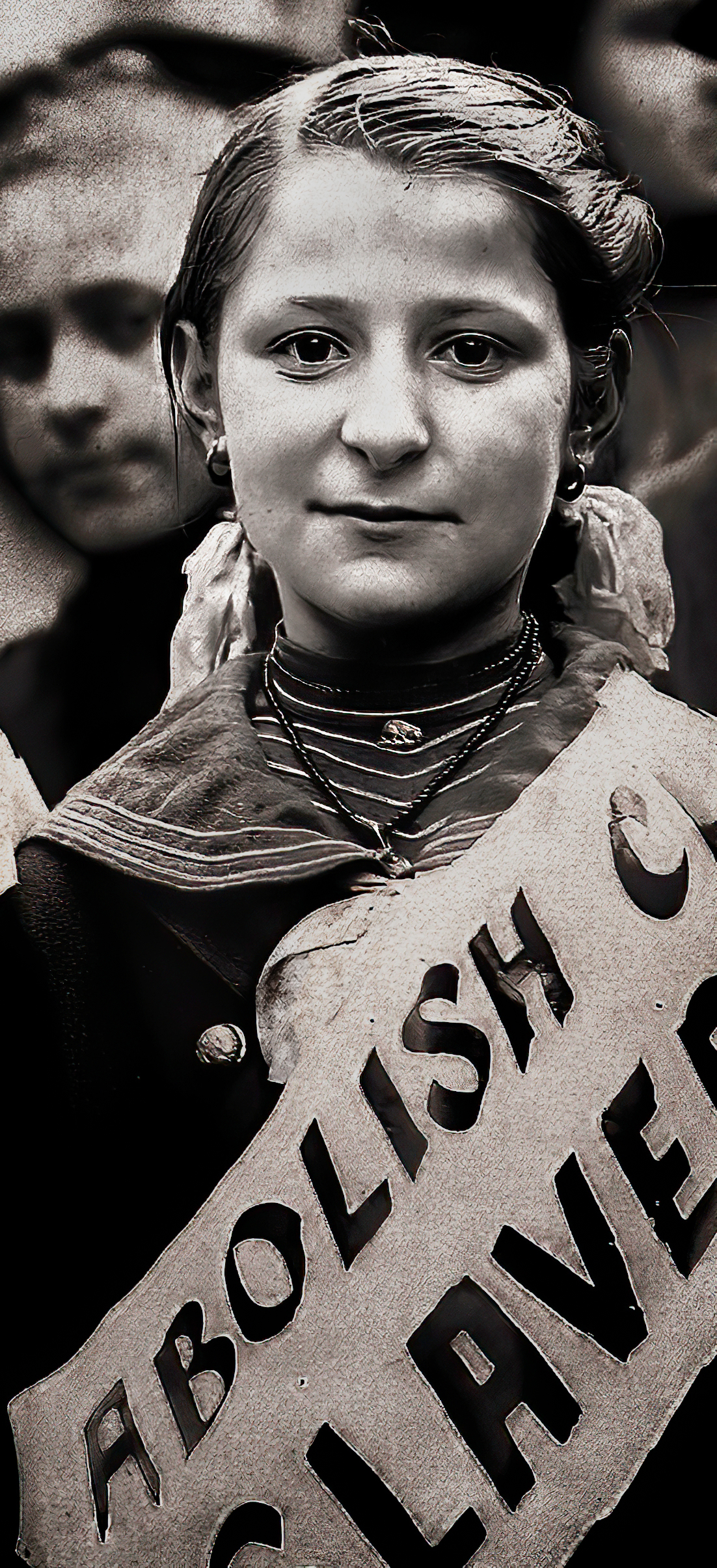
The English verb on the sign you carried on May 1, 1909, “Abolish child slavery,” was twinned in Yiddish with an adverbial construction: anider mit, “down with.” Strictly speaking, the verb was optional.

06591v
https://www.loc.gov/pictures/collection/ggbain/item/97519062/

So if we readers of that twinned imperative stop reading there, just at abolish, and then further generalize the verb from transitive to intransitive, it can be detached from its sentence. One May Day 1909 the sentence had specifically to do with American labor history, but in isolation its verb becomes half of a new, ahistorical unit of meaning. It no longer means topically, in regard to other words utterable in 1909, but forever, in regard to you in your now seen image. “Abolish,” said the word in the lower half of your image, and by not repeating itself in the upper half where you lived in 1909, it silenced that upper. There, in your half, you will never open your mouth to cry “Abolish!” In relation to each other, you and the possibility of abolition will forever be still unravished brides.

But from now on, the word abolish in this image will no longer have a meaning separable from you as you were in 1909. Having once read your image and your word as one, your fans forever after are going to know abolish as a composite of its letters and your smiling, closed mouth. Because the word will never again have a meaning separate from you, it will postpone your own abolition, forever. Because a word’s letters enfold your body in undying language, you with your mother-bird pin are never going to die.

06591uaisdgZ

Image previously posted at https://jonathanmorse.blog/2019/04/24/greetings-from-what-was-once-america/


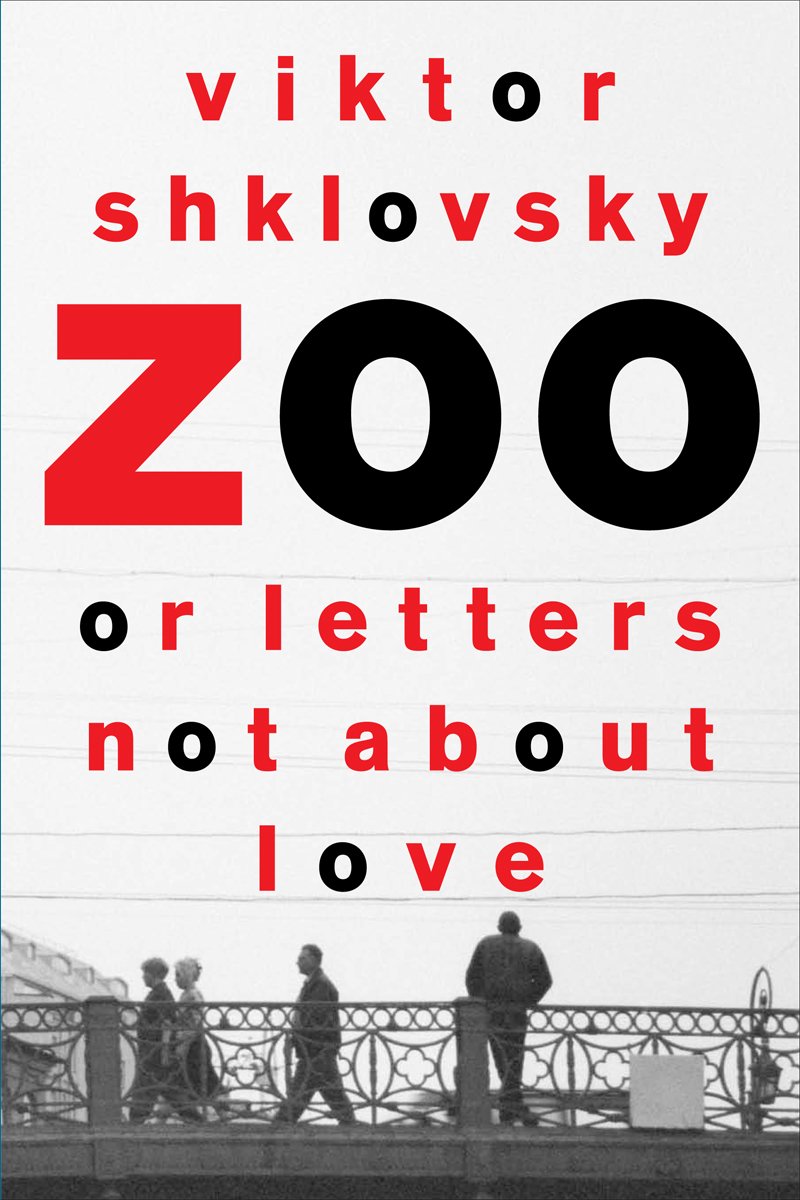
Keats and Shklovsky at the zoo

It was a windy day in Honolulu, but I stilled the air by shooting at 1/2000 second. In my hands, a camera’s mechanism recorded an image of whipping fronds immobilized and fixed to an image plane. That record now presents you the option of glancing at the plane, closing your eyes, and no longer seeing the imaged trees but experiencing them as optical illusion and as thought. A bug in the thinking part, however, is that in this instance the mind you think with happens to be vacationing in a tourist economy. Because people were paying to see these palms and these clouds long before you arrived on your own ticket, your own first view of them wasn’t really first and your belief in what you saw on first impression was an oversight. Whatever followed for you from that, whatever idea of palm, was aborted by irony before it had a chance to communicate. Did a Norton Anthology of Poetry word such as tresses recall itself to your memory, for instance? Sorry, that won’t work now. Your memory has already been polluted by poems and shampoo commercials, and the only honest reading of tresses will be a flatfooted dumbing-back-down to trees.

DSC_3053aiM

And it won’t even be your own unique dumbing-down. After all, every Saturday of every year along the fence around the Honolulu Zoo, artists sell pictures to tourists of what tourists have come to Honolulu to see: viz., palm trees. The artists call the pictures “real oil paintings,” and the only thing false about that claim is the plural marker at the end of paintings. In reality, of course, there is only one painting, repainted weekly by different painters. Its vacationing buyers buy it as a visual mnemonic, to remind them that once in the presence of a palm they experienced the miracle of first. But a mass-produced memory (the industrial term is souvenir) is perennial: experienced in community, like language, and expressible, like language, only through symbols (paint marks; words) that preexist it. How can it be reconciled with first?

John Keats’s solution was to assimilate first by simile into the continuum of beginnings across time. When Keats’s Cortez stared for the first time at the Pacific Ocean, he was on the brink of realizing that first can also, wonderfully! be all along (like the ocean) and, an instant afterward, forever (like the ocean) — and I (says Keats) felt a moment ago, in the presence of Homer, as Cortez once, for the first time, felt, and thenceforth began to feel forever. I can never feel that way again; I can never not feel that way again.

But the left side of my own composition is palmless.

In the tourist economy, the palms in my composition are also compositions: plantings at a shopping center. If I were to post their picture uncropped, you’d see that at their base is a gas station and to their right is a Starbuck’s. But, per Viktor Shklovsky, who said, “Art is the way of experiencing artfulness,” I cropped. Out of negative space I carved a diptych of trees and, on the other hand, sky. Then, for good measure, I modified my image’s pixels with controls bearing such names as Vibrance / saturation and Graduated neutral density filter. If that manipulation was aesthetically productive, you may have experienced a catch in the throat which you took to be a consequence of tropical light. But if the catch did come, it came as an aftermath of something planned and deliberate and related to the photomechanically produced surface of the picture, not the living palm.

Because you know now that you’ve known that truth all along, you’ll never again be able to experience the peak in Darien in silence. You’ll have to recognize that a camera and a computer have been up there with you all along. You might as well climb back down to sea level. On the other hand, down there you might as well also stop looking for trees in the painting you bought at the zoo and start looking for oil. But that too, it will turn out, has been there all along, and this all along will be seen to be all to the good.

A real oil painting: the picture has always told you that truth about itself. To the veteran wildcatter Viktor Shklovsky, I dare say, whatever is within its frame looks like a real gusher. His investment advice will be to see the picture’s paint as paint and let it make you wealthy in oil’s own way.
61yz++NPgFL

Dogmatic note: Shklovsky’s epigram from “Art as Technique” is usually translated as “Art is a way of experiencing artfulness.” But Shklovsky wrote in Russian, a language without direct equivalents to the English words a and the, and I’ve taken that as my warrant for preferring the.