Repost words and poem words

Jorie Graham, holder for the second time of the Pulitzer Prize in poetry and Harvard University’s Boylston Professor of Rhetoric, maintains a busy practice online as a poet on the ideal model of Shelley’s “Defence of Poetry”: “Poets are the unacknowledged legislators of the world.” Professor Graham’s daily legislations there are typically reposts dealing with a current event: global warming, environmental pollution, whatever people are talking about on campus today. Read off campus, the reposts don’t show any demonstrable expertise. In themselves, they offer us no reason to read them. But they have been compiled to be read in campus mode on social media, and what the act of reading does there is the social. Don’t believe me, it says. You don’t have to, and in any case language teaches you that you can’t. You can’t believe me, but — see! here on the screen! — you are me.

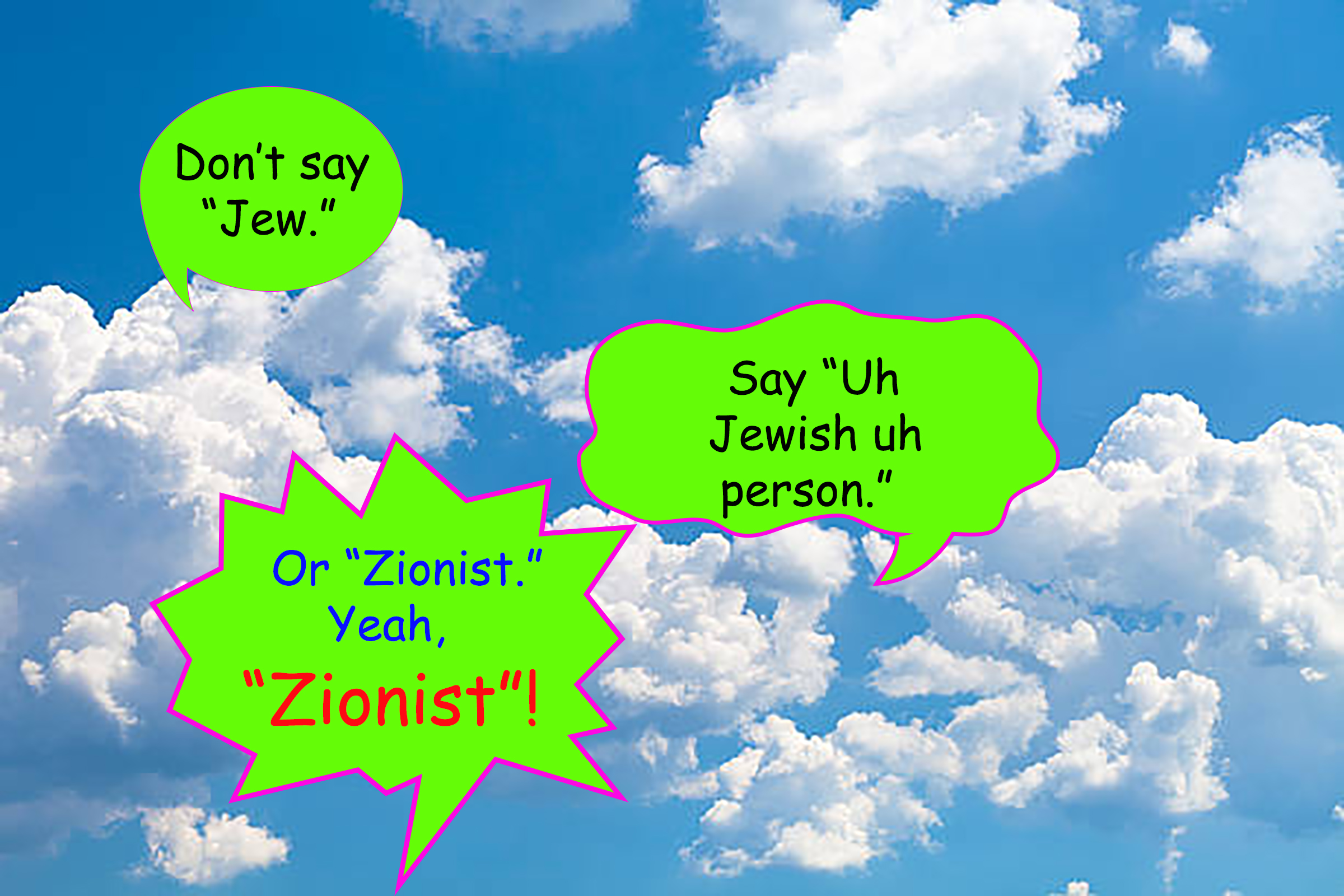
A recent Jorie Graham repost, for instance, looks in its entirety like this.

For some time, attributive adjectival tags such as “American Jew Rabbi” have been standard syntax in the language of social media. I’d guess that the practice dates back at least as far as Newt Gingrich’s lists of pejorative words recommended for use against Democrats, but as of 2024 it’s simply a part of communication’s background noise. Qua noise it communicates nothing: nothing about what Yaakov Shapiro believes or says or is; just nothing. Replacing a name, Yaakov Shapiro, with a nametag, jewrabbi, noise makes it inaudibly unnecessary. The name’s former space in the electromagnetic spectrum  is now only a rature. Layered over it is a coded statement about identity. Wave the code transmitter and that will turn itself on.

The transmission says Yaakov Shapiro is an American Jew rabbi. Having received the transmission, you have received everything that transmission can communicate. Professor Graham, notable for playing campus politics with poetry at Harvard, plays it briskly and lucidly here, as a repost of what oh everybody knows. Everybody knows: this is this.

But when the language of Jorie Graham’s own poetry speaks through her, she doesn’t sound  like that, with a one-word vocabulary, this. Her this repost lies flattened on its prose page, but her multi-word efforts to mean originate in a body-round prosodic force which creates not from the oh everybody knows of words in synonymy but from the never yet definable emptinesses where words are not.

to be the last human jorie graham

If Professor Graham could find words to speak that language about Yaakov Shapiro, then and only then she might assume the poet’s Shelleyan role of teaching us what Yaakov Shapiro is. But in its repost mode, all that her language expresses is a sound without reference: jew. In poem language, which is noun language, “Jew” does have reference. It is rich and complicated, modulated by an ever-changing flow of connotation. I sometimes get complicated with myself that way, the way I suppose all of us do on the occasions when we think of ourselves as sharing a complicated being. But repost language retranslates every complication back to a single-meaning simplicity. It says to Yaakov Shapiro, in the words of the language recycler Jorie Graham:

“You’re a POJ. It’s that simple. You’re a POJ. You’re a POJ.

“What else do I have a computer for, hunh?”

Smash forever: a note on the conservatism of Left language

In current (February 2024) Left discourse, a popular utterance, rising into the air amid waving banners, is, “Smash Zionism!” But an odd thing about the utterers marching with their flags is that their word smash, the verb that says what they think they mean, is much older than they know. I first encountered it myself more than fifty years ago, on a college campus where some very old professors from the days of CPUSA had organized a congregation of the Progressive Labor Party and were using it to teach the young the hymns of their youth. Just then they were abstractly exhorting us all to smash racism, but you can imagine Hegel being equally abstract long before that time and place — say, silently in 1927, before the screen in a German movie theater.

In any case, the marchers don’t seem to be any closer to their arrival now than they were then. Their metaphor remains in the future tense. It seems to want to be in the imperative mode there, but over the bullhorns it sounds more like a jussive: “You guys! Let’s smash!”

And likewise with the yo ho ho Treasure Island jollity of “Hands off Gaza.” When, o human reader, was the last time you yourself ever said “Hands off”? Can you even imagine how your voice would sound to yourself in its moment of utterance? It could be only one part of a uniform roar, with all the separate words blurred by the loud.

But here’s a literary history that may help with the speech problem.  Its data were compiled many decades ago, words and wardrobe and all. Its original beneficiary, Nabokov’s exiled T. P. Pnin, is here to be discovered before another movie screen — this one, however, in an American classroom far from the home that he will never see again.

Vladimir Nabokov, Pnin (1957)

You can fill in the part after the hyphen yourself. Professor Pnin, the last speaker of his lost language, was weeping for Ruki proch, which translates to “Hands off.” It isn’t a phrase he was ever taught to understand. He is one of those on whose language hands were laid.

Under the same hands today, the hand metaphor is no longer a matter of language but a body function. Its hymnody isn’t composed for words on a banner but for an electronic simulation of horned bulls. The bulls bellow by the codes of machine learning. Horns held in their still human hands, they now rush through the chutes they have built for themselves to the abattoirs.

A history of my 1970s experience with smash is available at https://jonathanmorse.blog/2014/01/08/political-history-book-song-anecdote/

Art’s work: poetry, medicament, prose

The Duncan [Oklahoma] Banner, February 4, 1916, page 9


“Norma Lawrence is 10 years old and picks from 100 to 150 pounds of cotton a day. Drags the sack which often hold 50 pounds or more before emptied. Lewis W. Hine. See 4569. Location: Comanche County, Oklahoma.” Lewis Wickes Hine, October 10, 1916. National Child Labor Committee Collection, Library of Congress, https://hdl.loc.gov/loc.pnp/nclc.00608. Contrast restored.

Wordless glare

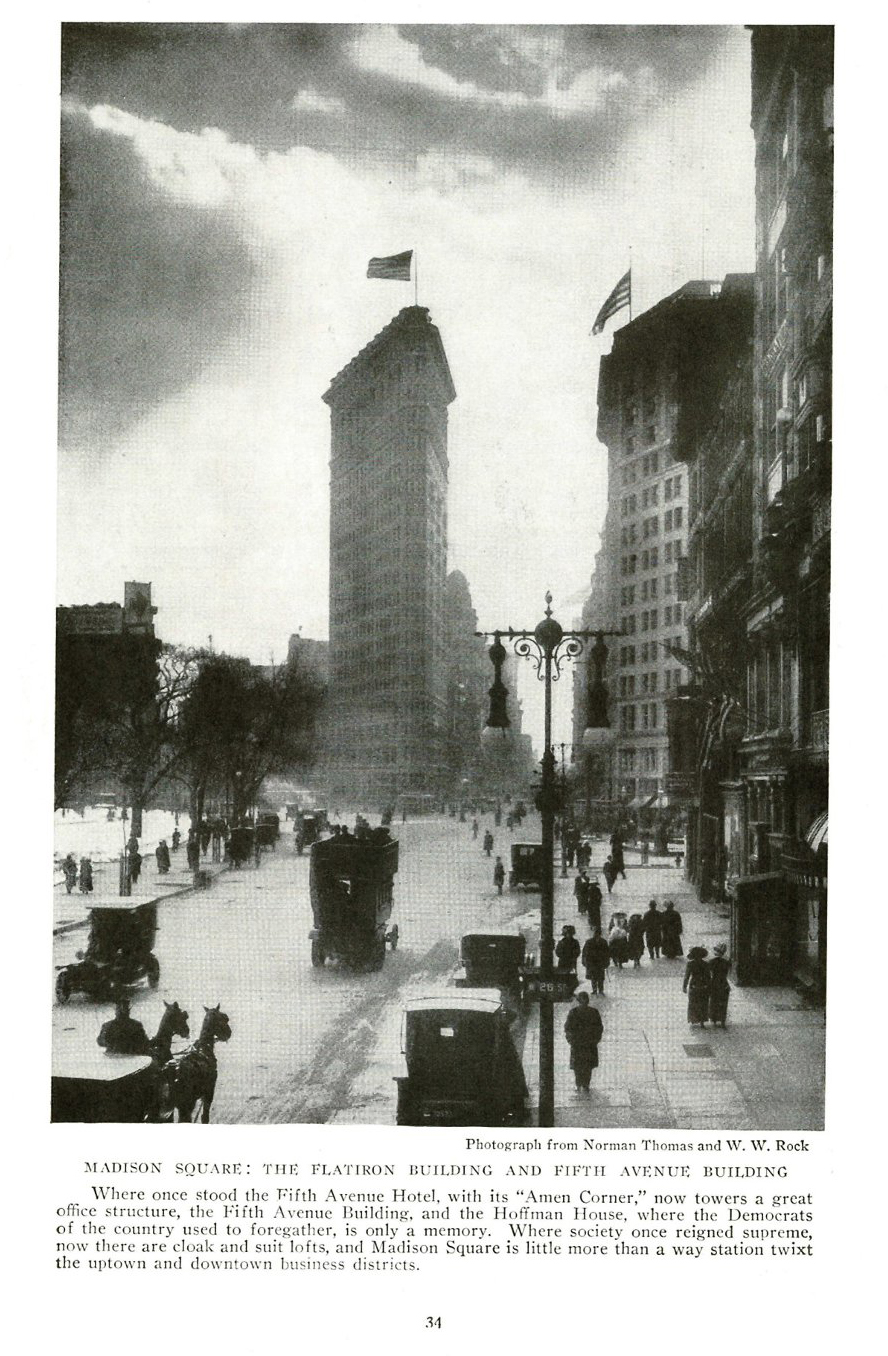
In 1918 a caption written in American expository prose employed the word twixt. The caption’s author assumed that that word twixt would mean something to his readership, just like the two-word combination Hoffman House. If it has turned out that you don’t know what Hoffman House means, he was wrong. In 1918 his words were part of a lexicon dating from 1918, but that number turned out to be impossible for computers to handle in 1918, when the word computer referred to a person. In 1918, on May 19, James Joyce wrote to Harriet Shaw Weaver about Ulysses, “It is impossible to say how much of the book is really written.” But in 1918 Joyce was in the process of writing off 1918.

William Joseph Showalter, “New York — The Metropolis of Mankind.” National Geographic, vol. 3, no. 1, July 1918, pp. 1-49.

In the same magazine, another block of prose suggested ten years as a range of history during which terms like Hoffman House might remain stably conceivable. The thought must have seemed reasonable while its subject was still sharing a present tense with horse traffic.   
But now we know that it’s harder to say “It identifies” than we used to think. In 1918 a billboard atop the building at the left of the image of Madison Square identified a remedy for indiscretion, but the identification couldn’t be read in 1918’s Geographic text and in texts post-1918 it can’t be understood.

But now that it can’t be understood, it can be read.

https://commons.wikimedia.org/wiki/File:Flatiron_building_1918.jpg. Contrast and detail adjusted.

As people say, it goes without saying. Artificial intelligence has transported us up Fifth Avenue to a caption. The caption’s lexicon now comprehends the legible words laxative water on a rooftop and legible fashion on women approaching a door. In the fullness of time, the deposit of data saved on a large-format negative in 1918 has matured at last. Its worth is redeemable now. But what, now, can at last mean?

We have been enabled to read 1918, but all we can do now that 1918 is over is to see it: depictionless, without seeing that its label bears a signature. Unsigned, however, is the glare that comes forward behind the Flatiron and reverberates from the wet paving. That you can still experience as people experienced in 1918: communication in a present not bound to a knowable future. The wordless glare in the gutter isn’t a part of the caption because it isn’t captionable. All along, faithfully paralleling the caption from 1918, has been something just above it on the page: something long pre-1918. There in the unchronicled is image uncaptioned, without words to slow the light that comes flowing down the gutters of Fifth Avenue to us.

April Fool’s: grade the stumbling metaphor

Philip Bump, “Over 24 hours, rumblings of a reckoning for the  right.” Washington Post, April 1, 2023, https://www.washingtonpost.com/politics/2023/04/01/over-24-hours-rumblings-reckoning-right:

For years, three central facets of right-wing politics in the United States — the aggressive online community, the media juggernaut and the leader of the far right — had run at or past the boundaries without issue. Then, over an exceptional 24-hour period, each stumbled.

Observation at coarse focus: metaphor’s long operating distance

The metaphor: by Emily Dickinson, Fr741.

Its point of view is behind thick, scream-deadening glass, and the glass is nineteenth-century windowpane, wavy and bubbly. If it were optical glass, you would see, instead,

or, with a click of a rotating turret

Then full stop. Observe the yellow eye afterward, too, if you choose, but your only humbly honest recourse is probably not to dare to think about it.

Look at the miscellaneous

After we realize we have seen, we sometimes teach ourselves the experience by giving it a name. The publisher George Stacy taught experience to other people for a living, and one day in about 1860 he made it his business to jot down some helpful ideas about an item newly visible then. You might call it American scenery, he suggested, and after that specifically clipper ship with a catalog number and a name, and finally, off in the right margin for any leftovers, miscellaneous.*

Library of Congress, https://www.loc.gov/pictures/item/2017645288/

§

When we think we have completed a naming like that, silence may follow. As of 1860, two technologies that seemed to prepare silence for us were the stereopticon and the lexicon of words specialized for the genre of caption, which shortcuts from perception to understanding on the quiet. Shortly after 1860, however, the Orphic moved melodiously back into the modes of knowing. During the Edison era Hart Crane composed in the presence of a Victrola, and something singable now to Stacy’s image might be one of Crane’s Victrola-words from The Bridge: curveship.

Requires red-and-blue stereo viewer.

§

Or, within Stacy’s margins, the lyric Miscellaneous. Before that came to mind it existed as silent sensation, but then Stacy cordoned it within yellow and connected it into a directory of names. That’s what happened, for instance, when one sensation resolved itself into the name George W. Green, Sail Maker. Roman-font George W. Green, living man, is no more, but through the agency of perception his yellow-highlighted name has entered the breath-warmed history of your own remembered reading. Simultaneously, in front of a building named Wall Street, another name ripens to significance. If the blur that’s barely distinguishable there happens to be a wheel-shaped grindstone, we may be able to begin naming the person treadling the wheel. What emerges from the blur won’t be capitalizable like George W. Green, but historical probability and the sociology of gender will at least let you call it a man. In a poem named “Sparkles from the Wheel,” Walt Whitman poignantly observed that to know such an incidental detail is only an approximation in parenthesis. The man he describes is a reduction to “(an unminded point set in a vast surrounding).” But he is a point.

§

And beyond the parenthesis lies Great Republic’s great dark hull. Ever since 1860, George Stacy’s image has filled us who see it with the desire to become one of its cargoes of shadow. Barely noticed at the foot of Wall Street, however, is another darkness, this one an inky deposit of words. Pasted onto a wall half the length of the pier, it amounts to a collection of promissory notes promising meaning.

The promise can’t be kept, however. Rendered delible by loss of optical and historical signal, the posted words now communicate only miscellaneous, and the meaning of that word doesn’t extend from its aged yellow script to the forever new word-bearing wall. At term, all you can use it for is seeing without reading. The words within the double image of Great Republic mean now only to it, not to us. In an artwork intended to be readable with reference to changing time, they have sunk back into their image and gone timeless again. They are no longer in the stereo plane of readable surface. Having returned to the pre-perceived, they no longer bear the meaning of a readable word, even miscellaneous.

But just offshore of that worded silence lies Great Republic, moored to the still land of words but afloat on its river in tiny tidal motions. If we hope to know it we’ll have to get moving, because the knowing will have to be done on moving’s sole term. That term will be a hapax legomenon: a single generatrix of significance, a curveship not in the lexicon of caption. But if you’ve failed at learning the motion and you’re still on the pier with the unreadable words, do at least whisper to yourself in Great Republic’s shadow, Victrola.

* A small mystery about this stereo pair is that the images appear not to have been taken at the same time, even though stereo cameras generally have twin lenses with synchronized shutters. In the right-hand image, one of the ferry terminal’s three gates is open and the funnel of a boat is visible. In the left image there is no boat, all three gates are closed, and something round on a stand is in front of one of them, with the man I identify as possibly a knife-sharpener. (But what would a knife-sharpener be doing in this neighborhood?) Likewise, the ships in the far background seem to have moved, and in the left image but not the right a boat is visible behind the ship astern of Great Republic. Perhaps Stacy’s published stereo card is a composite of the left half of one pair with the right half of another.


Update, August 10, 2020:

Replying to a query, Michelle L. Smiley, Ph.D., assistant curator of photography at the Library of Congress’s Prints and Photographs Division, writes:

“Thank you for contacting the Prints and Photographs Division of the Library of Congress. I have looked at the Clipper Ship stereograph in question and your observations about the changes in scene between stereo images seem accurate. These are fascinating differences between images, but they are also not unusual.

“While you are correct that photographers did employ stereographic cameras containing two lenses, true synchronous shutters didn’t come into common use until the 1880s, so many stereo photographs prior to that time are asynchronous. Some photographers used what was called a flap shutter over their lenses to synchronize their exposures, but most were removing a lens cap or a stop individually from each lens. Additionally, it was also a practice for photographers to use a camera with a single lens to take two pictures in succession with a slight adjustment in the position of the camera between shots. After consulting with my colleague, we believe that, given the seeming match of the offset of these two views, Stacy was using a twin lens camera, but making a unique exposure with each lens. My colleague also pointed out that portrait photographers may have been more likely to use a flap, whereas city/landscape photographers like Stacy may have had less of a concern with people or things moving between exposures. It’s also possible that Stacy composited halves of two separate negatives as you speculate, but with only the visual evidence to go off of, it is difficult to say definitively which of these methods was used.”