Days almost without sun


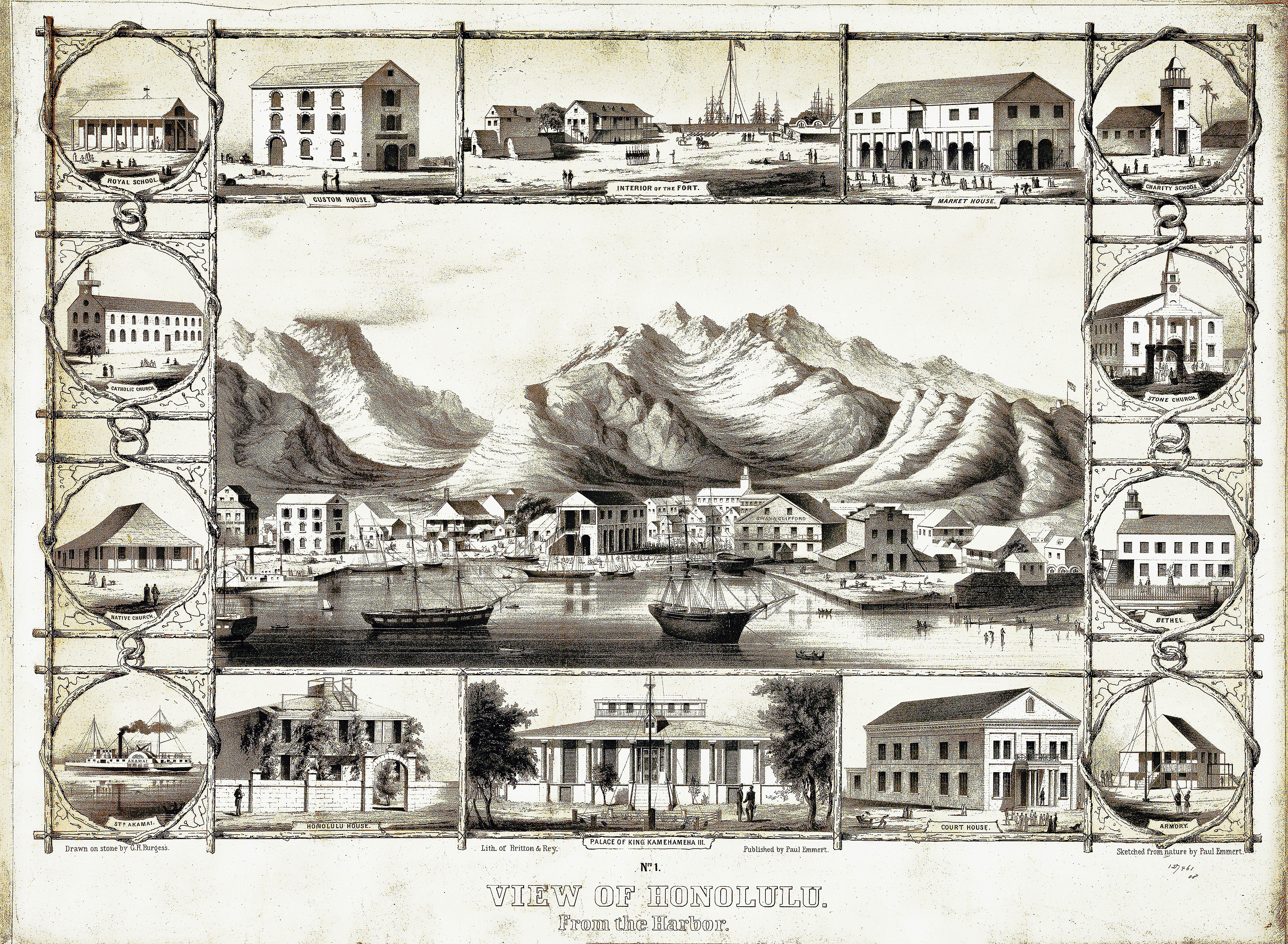
Here, dating from 1854, is a view of downtown Honolulu.
Here’s a detail from the lower right of the image.
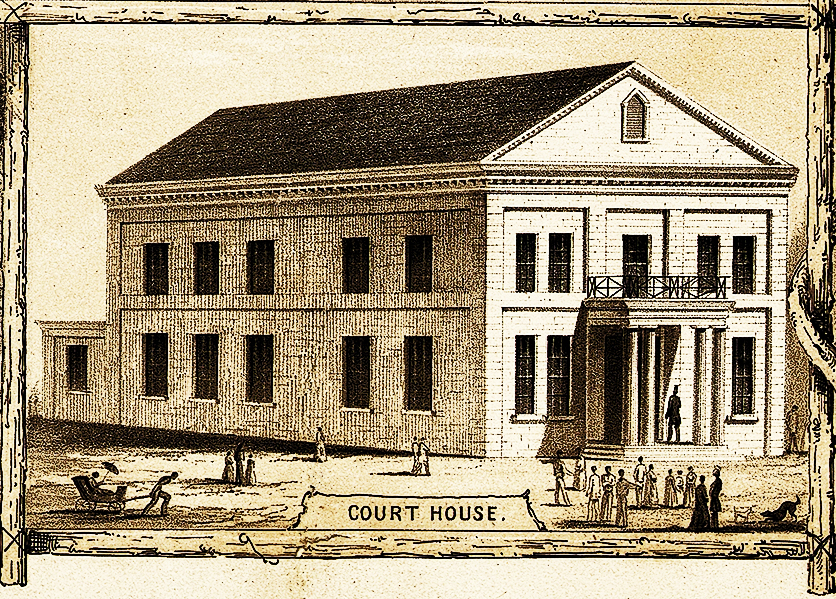
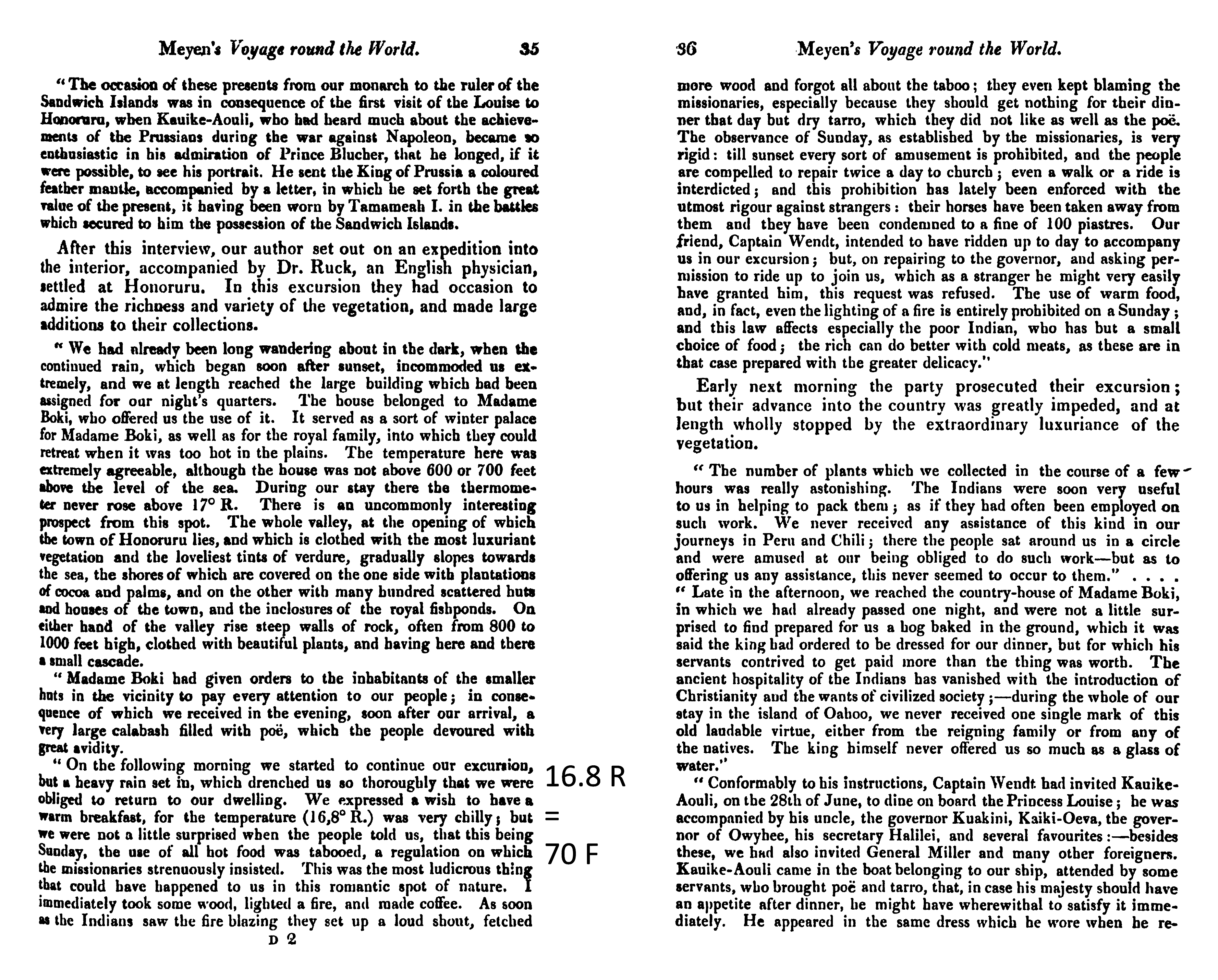
And here’s a double description of what your eyes have just beheld. One half of the description comes from the 1847 second edition of Herman Melville’s first book, Typee; the other half comes from an 1835 translation of what appears to have been Melville’s source, an 1834 account of an expedition around the world by the German botanist F. J. F. Meyen.

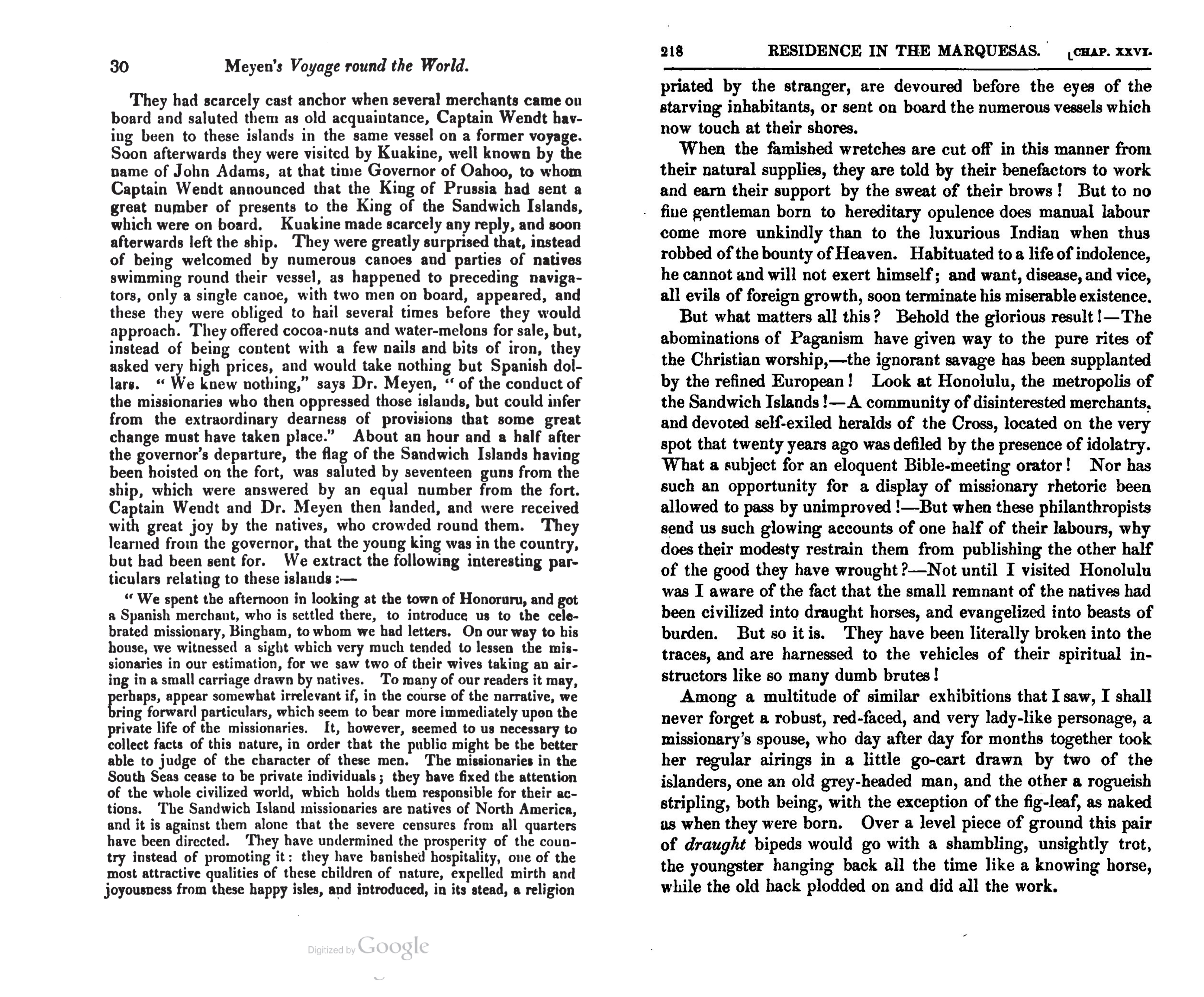
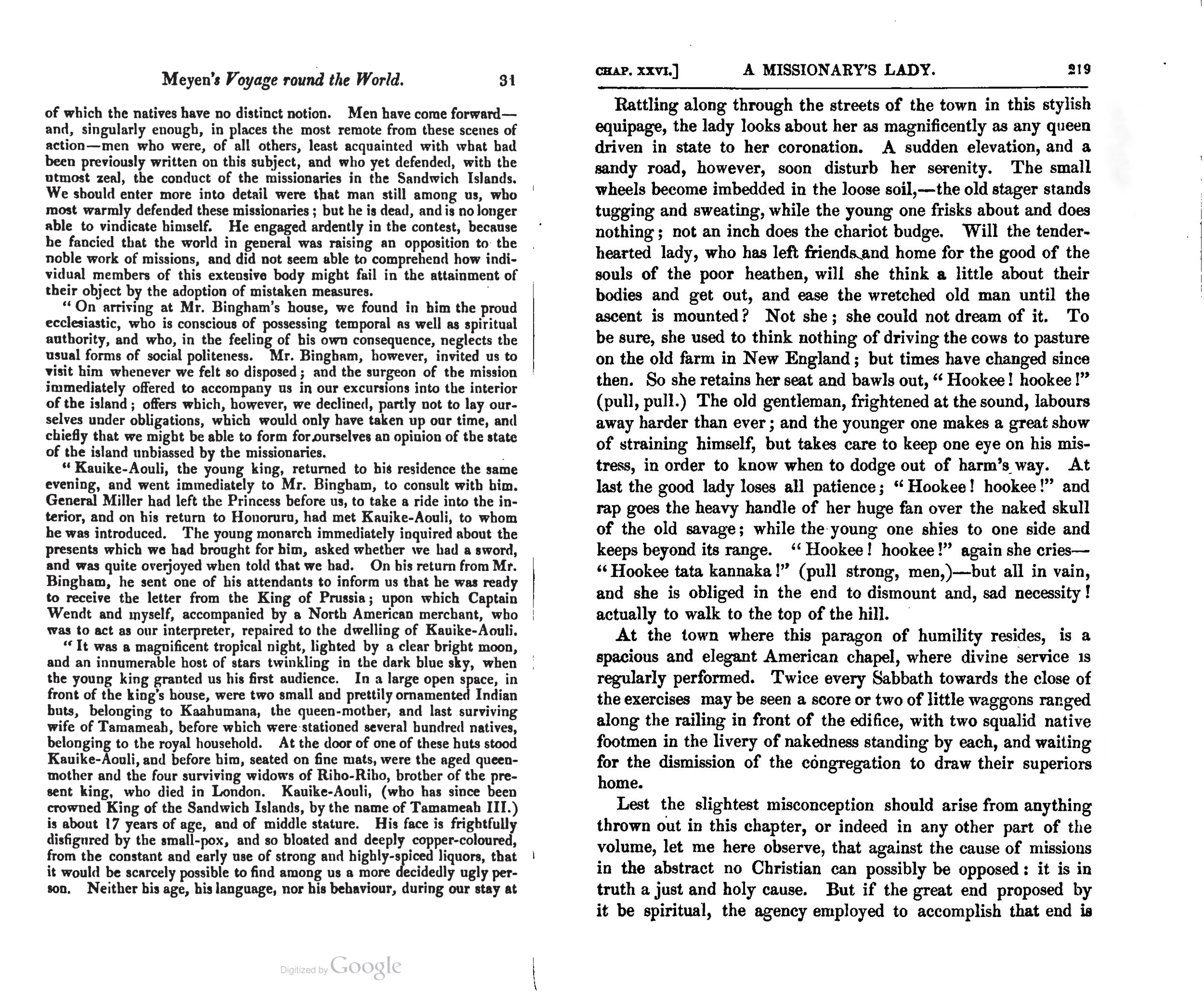


And here are two more pages of Meyen which Melville didn’t use.
As I write, a group of Hawaiian monarchist protesters are holding up construction of the great Thirty Meter Telescope atop the Big Island’s Mauna Kea. They call themselves cultural practitioners, and what they claim to be practicing is the animist religion of pre-contact Hawaii. In this they are supported with money and public relations by Kamehameha Schools / Bishop Estate, the combined successor power of Hawaii’s nineteenth-century puppet kings and their Christian missionary puppeteers.
Typee is partially non-fiction, partially fiction. For a start, Melville’s “four months’ residence” in the Marquesas was only three weeks. As Hawaii’s history is generally taught, it too is partially fiction. But look at that illustration again. Look at that woman with her parasol and her Hawaiian slave.
It tells you that the things called history and culture are complicated, but sometimes they show us things that are true. So please: before you click away, look one more time at the man towing his missionary burden. He wasn’t a king or a priest. None of the people blocking progress on Mauna Kea today would claim descent from him. Still, he did exist, and perhaps he’s worth trying to remember.

while the inauthentic look upward.

The book’s title is A Comprehensive Grammar of the English Language. To give you an idea of scale in the image, its length is 1789 pages.
What you’re trying to comprehend on the other side of all those words is one of Hawaii’s big cane spiders, Heteropoda venatoria. As the Latin name venatoria implies, it’s also known in English as the huntsman spider. But it hunts unspeakingly, without horn calls or ritual cries or marking of the cheeks of its offspring with the blood of its prey.

The bird is a red-vented bulbul. The tree is a rainbow shower tree.
The location was Honolulu’s Koko Head District Park. The day, July 19, 2019, was windy.
The poem is Elisabeth Langgässer’s “Frühling 1946” (“Spring 1946”). The literal translation from The Penguin Book of German Verse, ed. Leonard Foster, is, “I rise out of the toad’s domain.”

The course of the vascular system in a taro leaf.
