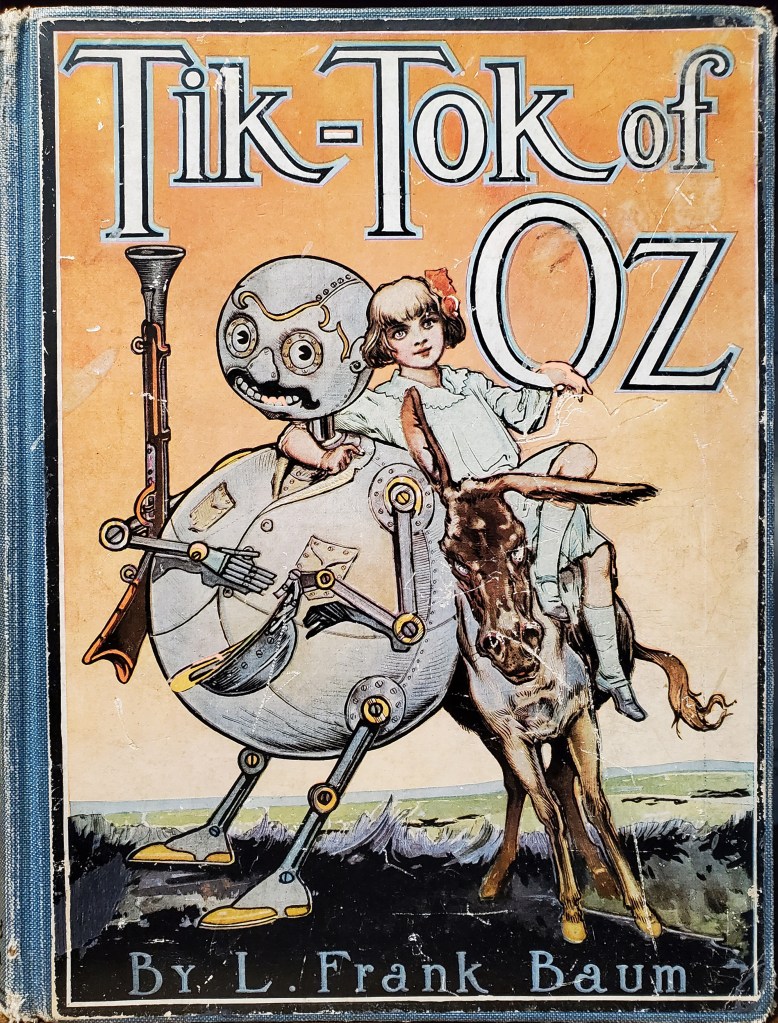
She hydrates
Textures of the jet age
Behold

In chapter 42 of Moby-Dick (“The Whiteness of the Whale”), Ishmael perceives at the heart of things a “dumb blankness, full of meaning, in a wide landscape of snows – a colorless, all-color of atheism.” Wallace Steven’s whiteboard covered with snowy words is that landscape’s weather report. One word of its text, however, is not atheistic white but sacerdotal black letter: the word Behold.
—
The black word’s etymology in the OED is Germanic. Old Saxon bihaldan, Old English bihaldan, and modern German behalten all descend from the Germanic healdan, “to hold.” But, says the dictionary, “The application to watching, looking, is confined to English.”
Some of the word’s uncomplicated first sense of mere holding survived as late as the era of Early Modern English. “Euery man behelde the same oppynyon,” says one of the dictionary’s quotations from 1525, and one from 1650 still keeps it close to “held to be”: “It is beheld in Scripture as most solemn and of highest importance.” But by 1609 the possessive behold had begun twisting together with the spectatorial lo in Shakespeare’s Lover’s Complaint – “And Lo behold these tallents of their heir, With twisted mettle amorously empleacht” – and by 1611, in the King James Bible’s “I, behold I, establish my covenant with you,” we can hear the word approach our sense of it through the course of its deflections from possession through contemplation to self-fascination. As it traversed time, the definition of behold altered its course from “I have” to “Watch me have.”
But in chapter 124 of Moby-Dick (“The Needle”), Ahab remagnetized his ship’s compass with vaunting hammerblows and then cried to his watching crew and us watching readers, “Look ye, for yourselves, if Ahab be not lord of the level loadstone! The sun is East, and that compass swears it!” In cringing retrospect, Ishmael was to moralize about “Ahab in all his fatal pride.” But in the white world beheld by the Snow Man, there is neither retrospect nor prospect. There can never be anything to contemplate but a needle, “quivering and vibrating at either end; but at last [settling] to its place” between dumb blankness and black letter.
—
Tom Stoppard, 1937-2025. Because the words he wrote never stopped changing, I happily failed to believe that he would die.
Amsterdam, 1734: the black slab descends toward the ionosphere,
Karajan’s brass and timpani prepare to sound Also sprach Zarathustra, and in volume 1 of his magnificently tinted Locupletissimi rerum naturalium thesauri accurata descriptio, et iconibus artificiosissimis expressio, per universam physices historiam, Albertus Seba has published an image of an object actually present to the senses in a Wunderkammer. Until now it had been only an idea articulated as a myth, but now it is an artifact. You can see it, touch it, smell its museum smell. In its museum it has a proper name: the hydra of Hamburg.
One year later, however, Carolus Linnaeus will dissect the corpus and conclude that it is a fabrication cobbled together, as literally as can be, from the skins and teeth of various snakes and ferrets and weasels. After Linnaeus added that he thought the stitchery could have been the sewing-circle work of monks fabricating proof-texts for the Book of Revelation, he had to run from Hamburg for his life – again, as literally as running could be.
https://royalsociety.org/blog/2022/01/redacting-the-hamburg-hydra/
—
In the first age of Karajan, it was the fashion to approach the movie screen, lie down on the floor in front of it, and croak, “Oh wow, look at the colors.”
Later generations of the age of Karajan are still looking. Their skulls show the scars of fresh new stitches, and the colors are agleam as always. The hydra never has stopped moving its feet or gnashing its teeth.
Th’ empurpled
Fadings: low fidelity
Disc 1: the United States ends its neutrality and enters the Great War. Track by track, one side of one historical record sings:
Disc 2: in the same date range, the title of a song has promised its hearers a charm, and those who made the song audible have pledged their fidelity to its magic. But what ever remains of the music of time? Little did they seem to know, Madame Case and Mr. Edison and the performer of the obbligato, how breakable records are.
https://archive.org/details/edison-82078_01_2460