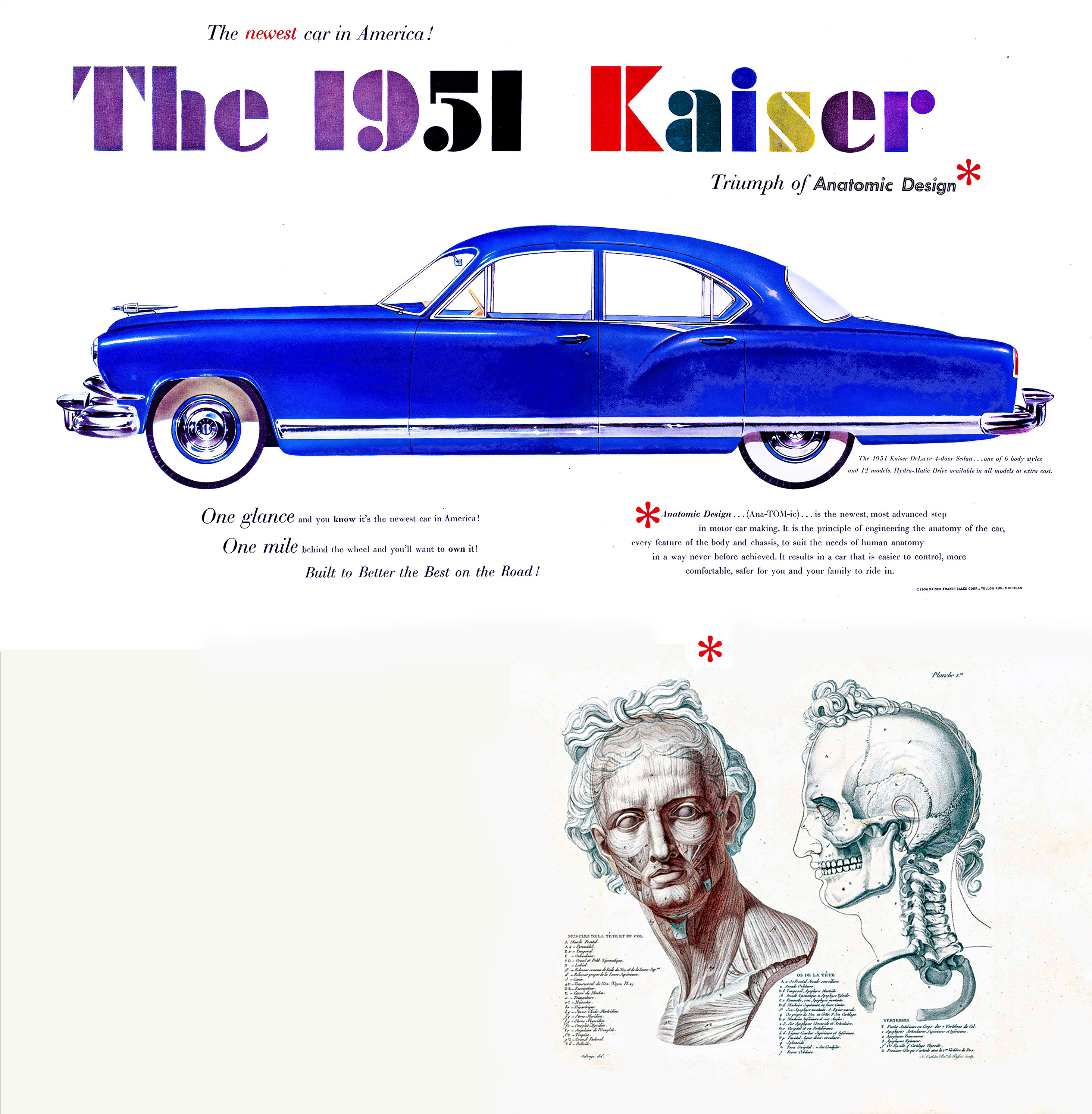
* Asterisks 2 to n:
* American industrialist Henry J. Kaiser, 1882-1967. He made a fortune in steel and cement.
* As a boy, he was deeply affected by his mother’s premature death. Years later, as an owner of shipyards staffed during World War II by workers not healthy enough to serve in the armed forces, he established for them what’s now the Kaiser Foundation Health Plan. A pair of his glasses used to be on display in the ophthalmology department of Kaiser’s Pensacola Street clinic in Honolulu.
* Elsewhere in Honolulu there’s a big housing development named Hawaii Kai, with its Henry J. Kaiser High School. In Hawaii Kai (kai is the Hawaiian word for “water”), Kaiser lived in an enormous pink oceanfront mansion which fell after his death into Gatsbyesque disrepair and abandonment. But Hawaii Kai thrives, and in Waikiki there also thrives what’s now called the Hilton Hawaiian Village: a Kaiser hotel and apartment complex which once featured an auditorium housed in a silvery geodesic dome.
* One major reason for the Allies’ victory in World War II was Kaiser’s mass-produced Liberty ships: bare-minimum freighters which came pouring off their assembly lines at the rate of a ship per line per month. The admirals laughed at Kaiser for saying “front end” and “back end” instead of “bow” and “stern,” but except for him they might have wound up swabbing decks for fascists.
* And then after the war, with its pent-up demand and its development ideas on hold, there came the Kaiser car, its upscale model the Frazer, and later the Henry J., one of the first subcompacts. You could buy one of those from Sears, Roebuck under Sears’s brand name Allstate.
* About the Kaiser’s own anatomy, I think the statistic is that it was the first car to have a padded dash. There were other evolutions too, such as a three-door vehicle that looked like a sedan but actually was a station wagon. Its left rear door was a dummy; inside, below the window, was the mount for the spare tire.
* But despite all its lookings forward, the Kaiser Motors Corporation died after only a few years, slowly strangled by undercapitalization.
* But the classical bust tucked into the footnote beneath the car derives educationally from an ancient statue called the Apollo Belvedere. Its anatomy, as you see, is perdurable as life is perdurable.
* O Apollo.
