


https://music.youtube.com/


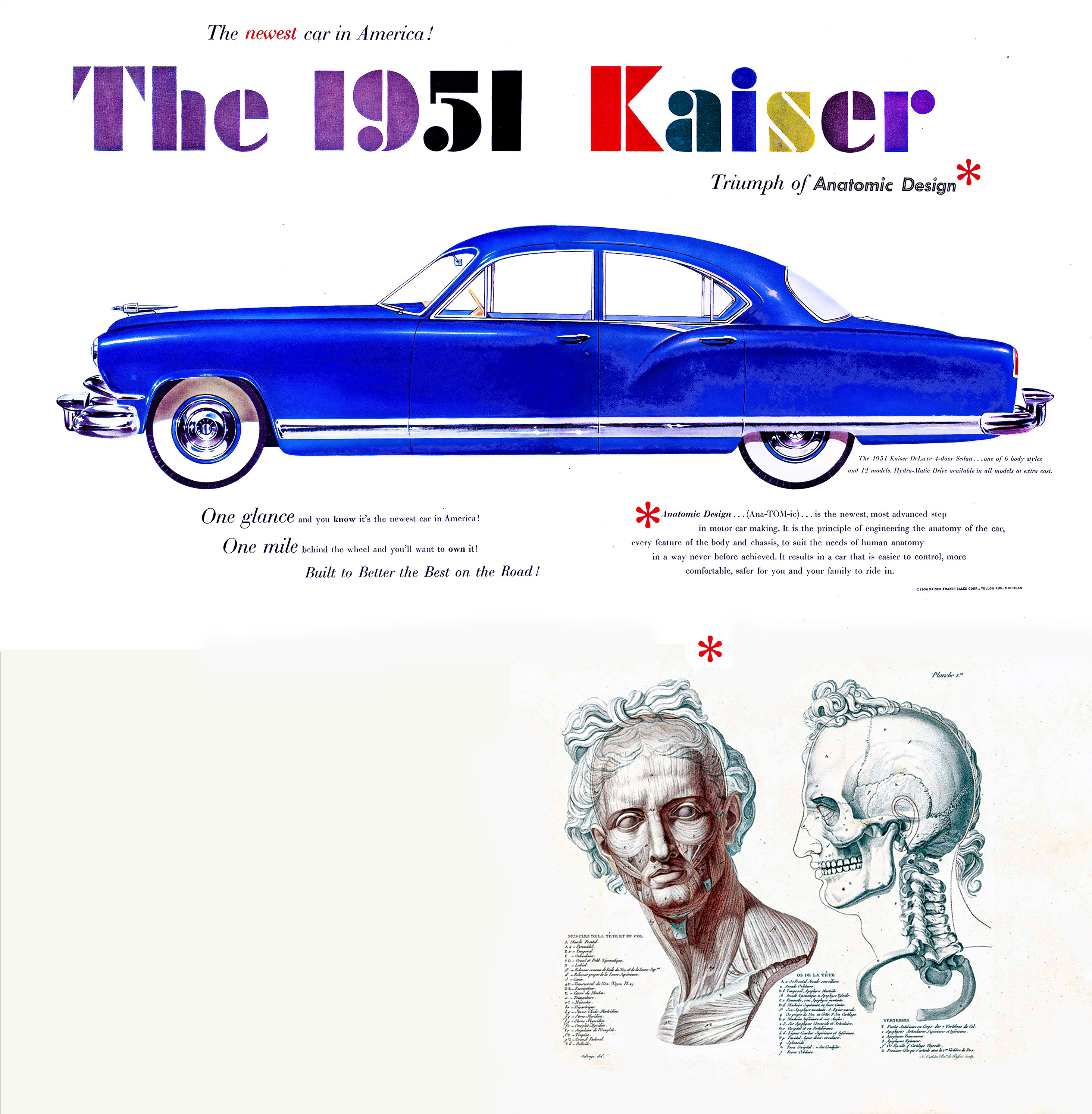
* Asterisks 2 to n:
* American industrialist Henry J. Kaiser, 1882-1967. He made a fortune in steel and cement.
* As a boy, he was deeply affected by his mother’s premature death. Years later, as an owner of shipyards staffed during World War II by workers not healthy enough to serve in the armed forces, he established for them what’s now the Kaiser Foundation Health Plan. A pair of his glasses used to be on display in the ophthalmology department of Kaiser’s Pensacola Street clinic in Honolulu.
* Elsewhere in Honolulu there’s a big housing development named Hawaii Kai, with its Henry J. Kaiser High School. In Hawaii Kai (kai is the Hawaiian word for “water”), Kaiser lived in an enormous pink oceanfront mansion which fell after his death into Gatsbyesque disrepair and abandonment. But Hawaii Kai thrives, and in Waikiki there also thrives what’s now called the Hilton Hawaiian Village: a Kaiser hotel and apartment complex which once featured an auditorium housed in a silvery geodesic dome.
* One major reason for the Allies’ victory in World War II was Kaiser’s mass-produced Liberty ships: bare-minimum freighters which came pouring off their assembly lines at the rate of a ship per line per month. The admirals laughed at Kaiser for saying “front end” and “back end” instead of “bow” and “stern,” but except for him they might have wound up swabbing decks for fascists.
* And then after the war, with its pent-up demand and its development ideas on hold, there came the Kaiser car, its upscale model the Frazer, and later the Henry J., one of the first subcompacts. You could buy one of those from Sears, Roebuck under Sears’s brand name Allstate.
* About the Kaiser’s own anatomy, I think the statistic is that it was the first car to have a padded dash. There were other evolutions too, such as a three-door vehicle that looked like a sedan but actually was a station wagon. Its left rear door was a dummy; inside, below the window, was the mount for the spare tire.
* But despite all its lookings forward, the Kaiser Motors Corporation died after only a few years, slowly strangled by undercapitalization.
* But the classical bust tucked into the footnote beneath the car derives educationally from an ancient statue called the Apollo Belvedere. Its anatomy, as you see, is perdurable as life is perdurable.
* O Apollo.

Shenandoah Herald [Woodstock, Virginia], Friday, April 23, 1897, page 3. As the late theologian Ernest Angley used to explain,
“HEE yawl! HEE yawl!”
1.
In 1881, the magnate Andrew Carnegie opened an iron mine in central Pennsylvania, built a company town for it, and named the town after his native land: Scotia. Soon enough, it was a home. It had become a setting.
2: some texts for the performance
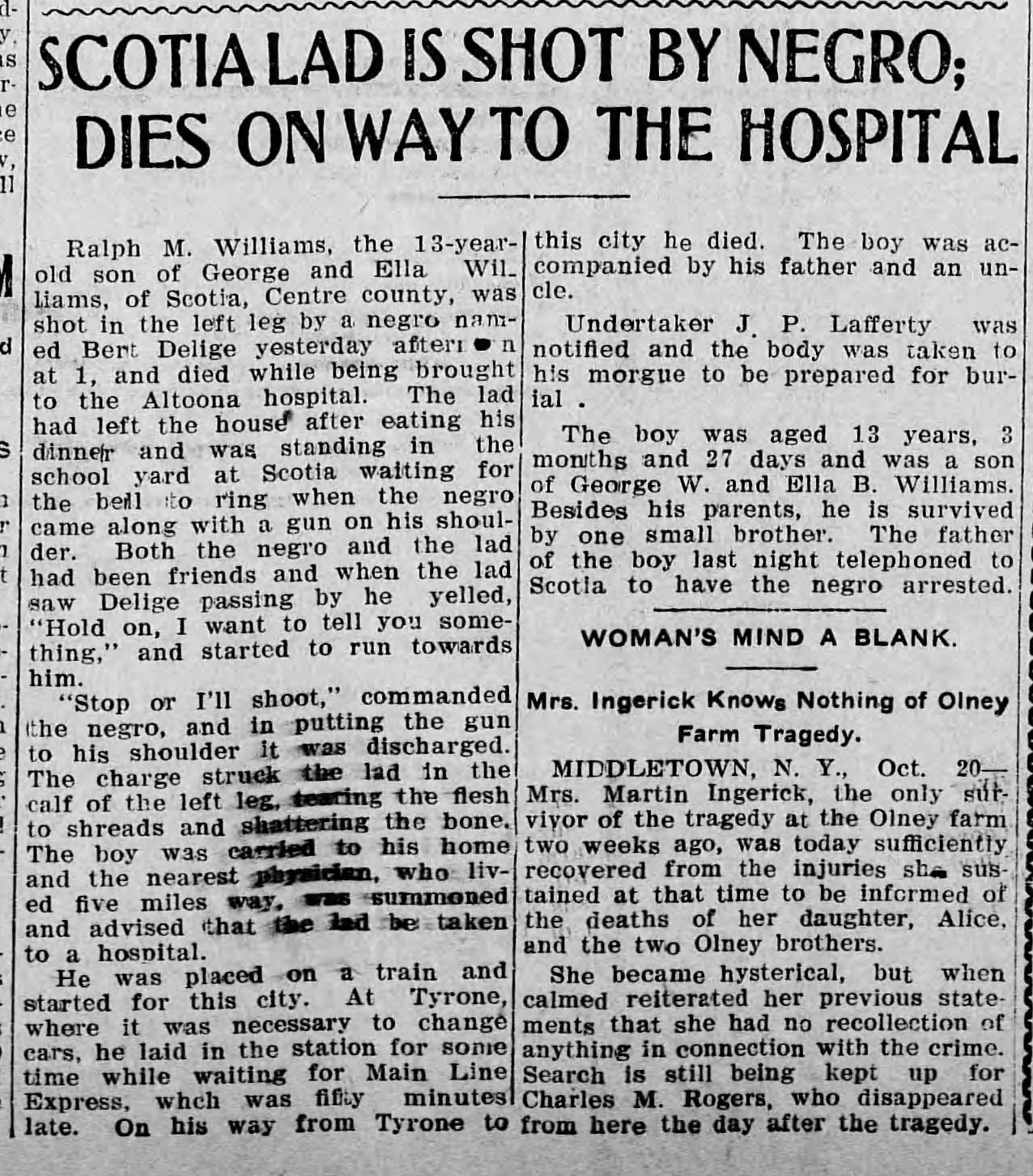
Altoona Times, Saturday, October 23, 1905, page 1:
Williamsport Daily Gazette and Bulletin, Tuesday, August 16, 1910, page 6:

See it die away.
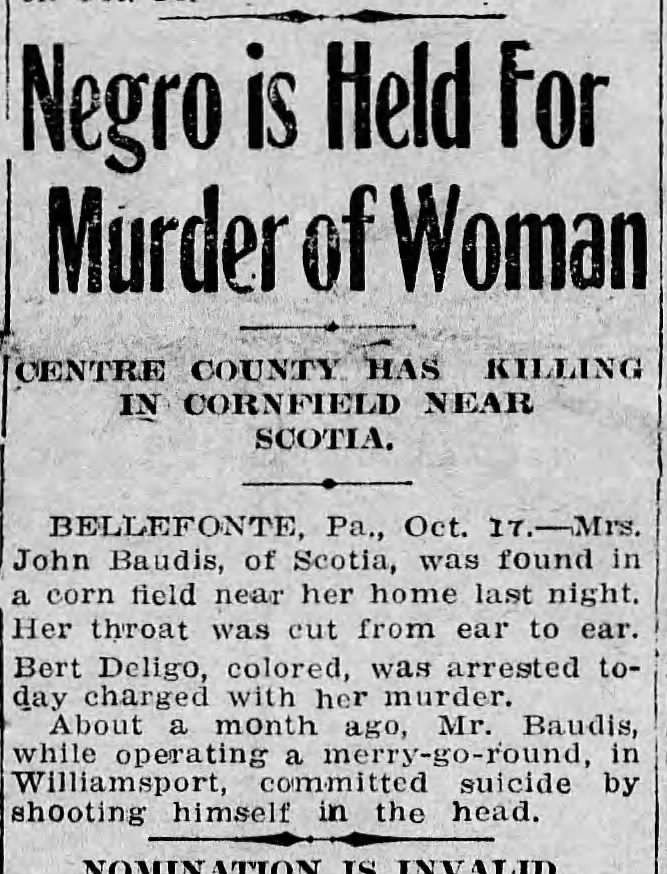
But then resume. Altoona Times, Tuesday, October 18, 1910, page 1:
Altoona Times, Wednesday, November 23, 1910, page 1:

Harrisburg Patriot News, Wednesday, April 26, 1911, page 7:

The Danville News, Wednesday, April 26, 1911, page 1:

3. But elsewhere in the continuum
Altoona Tribune, Thursday, June 10, 1897, page 6:

Tyrone Daily Herald, Thursday, June 10, 1897, page 6:

It appeared that the body that was Scotia lived on, regardless.
4. But then, “with startling suddenness”:
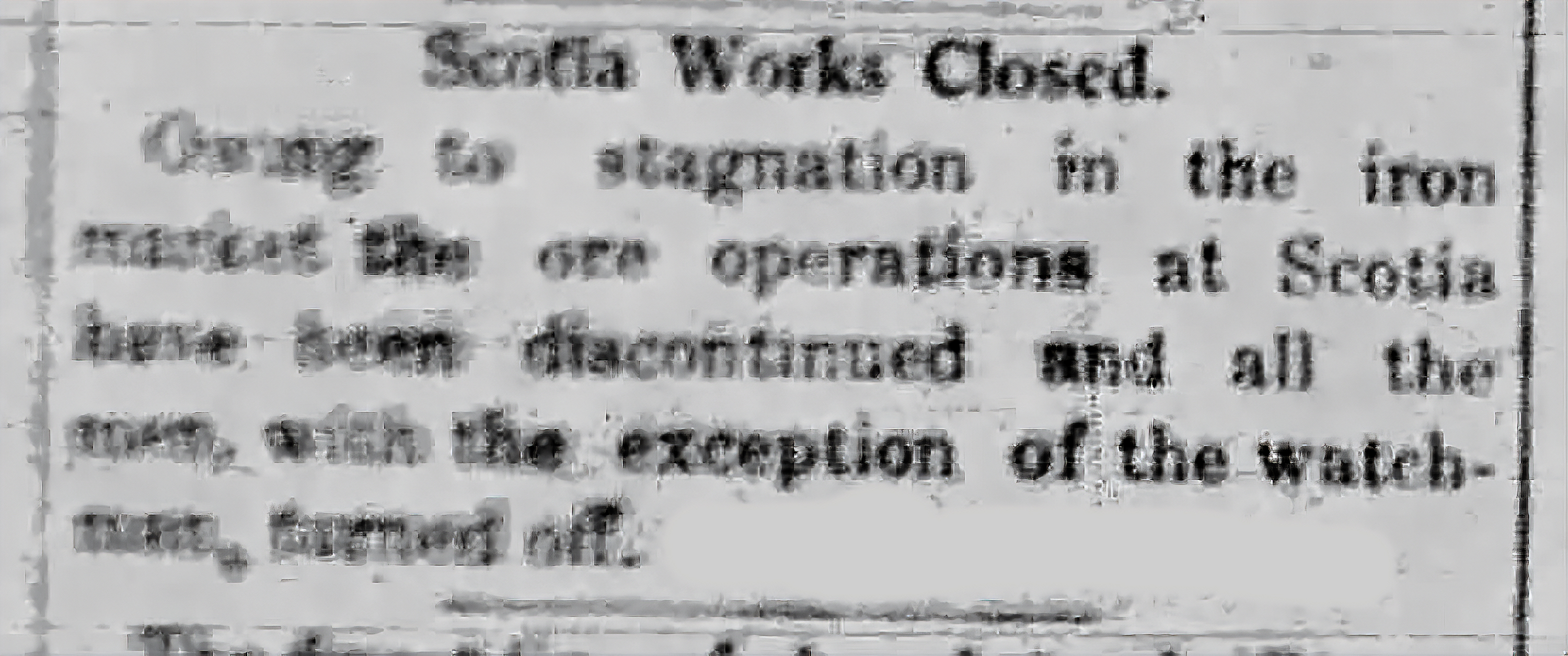
The Times [State College, Pa.], Friday, March 22, 1912, page 8. It was the sentence.
By 1914, Scotia was a ghost town. During World War II an attempt was made to reopen the mine, but it was abandoned. Today only traces of the mine and the town remain. The word “Scotia” no longer has the power to mean what it meant to the poor merry-go-round man.
5.
I grew up near a different Scotia: Scotia the ruin. What you are about to see is a part of that Scotia which still happens to exist, though it is no longer on Scotia’s ground. I can’t remember when I picked it up and carried it away, but it was very long ago — probably in the early 1960s. Beside a low earthen berm that had once been the course of a railroad track, I noticed a fallen bough that seemed to show traces of having been worked. Stepping off the berm, I picked it up. It had gone so rotten that I could break it over my knee, but it still bore traces of function. It had once been a crosstie that carried the weight of iron.
The dead wood’s decay crumbled in my hand. This fell out. It was, is, a railroad spike probably hammered home in the late nineteenth century.

6.
I took its image today. The hand holding it before the camera is mine.
For only a short time more, of course. But it is iron, and it helps me be steady.
—
Mark Hughes, “A Geologic Wonder: Scotia Barrens.” https://pabook.libraries.psu.edu/literary-cultural-heritage-map-pa/feature-articles/geologic-wonder-scotia-barrens
Centre County [Pennsylvania] Historical Society, “Scotia.” https://centrehistory.org/article/scotia/
“The Ruins at Scotia Barrens.” Valley Girl Views: Sights to See, Events to Attend, & History to Know in the Central Susquehanna Valley, August 6, 2019. https://susquehannavalley.blogspot.com/2019/08/the-ruins-at-scotia-barrens.html
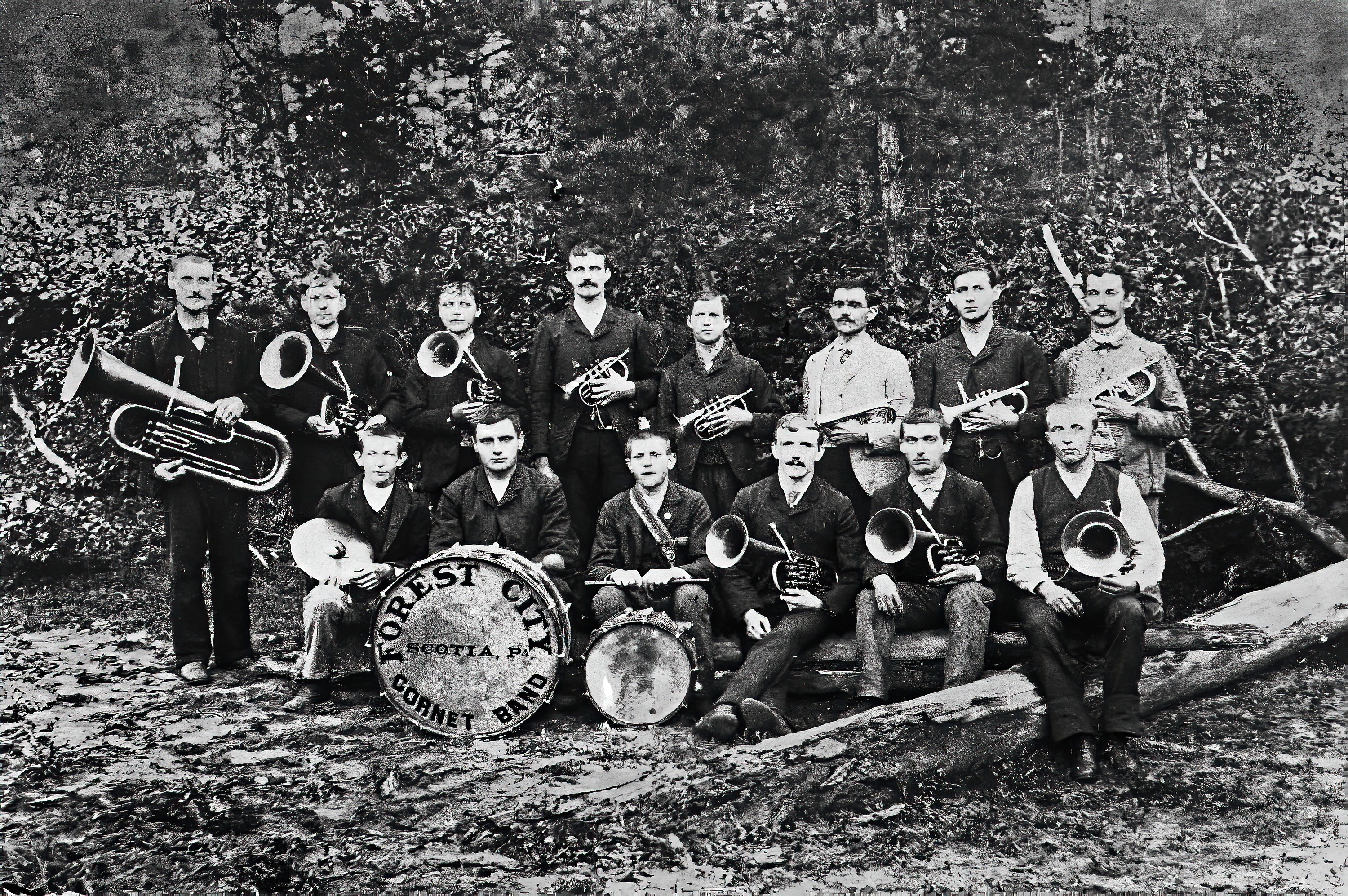
The photograph of the Forest City Cornet Band is on this page, but its original source isn’t named. Artificial intelligence and I have restored it.
—
August 1, 2025: With thanks to Kim Bridges, here’s a detailed article, with portrait photographs, about the trial of Bert Delige.
https://panewsarchive.

Rochester Democrat and Chronicle, Saturday, October 20, 1906, page 15
I approached the leaf and the vine from behind a camera. I manipulated the apparatus to make them seem rounder and curvier, and then to their shaped roundness I linked a song in the Darwinian genre of jazz, with solos evolving into one another. The new record backed up its Piltdown hoax with a lyric that was detectable only with a fossil apparatus.
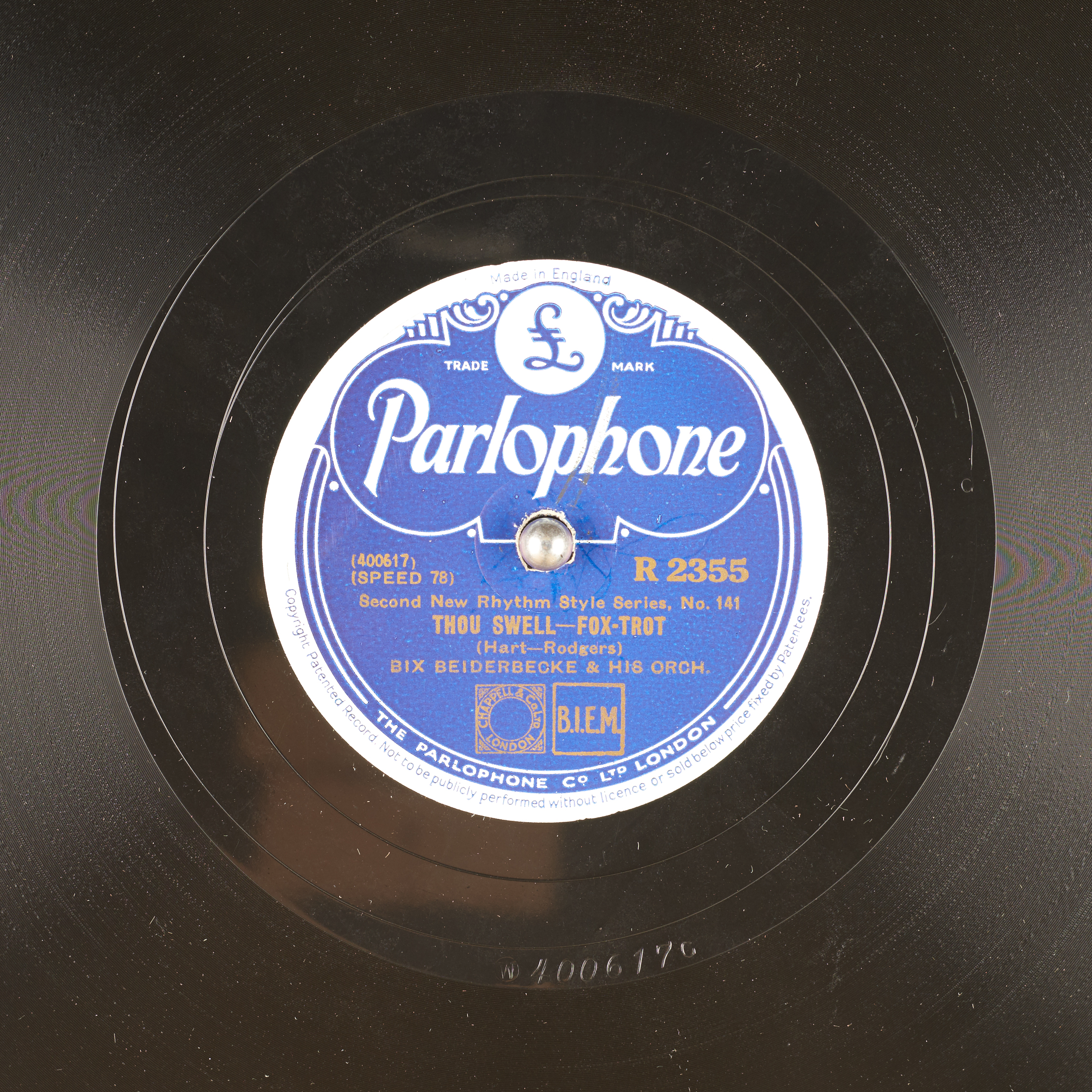
The leaf and the song had merged into an ensemble. Their lyric was a fuller, jazzier sense of a preexistent word: in this case, the tumid old word “swell.” Now it sounded lifelike. Having been looped into white noise, it linked the prehuman locution “Let there be” with a flip side of words.

But from the beginning, the record had always been scheduled to end. In his groove, the philosopher of the scientific method understood that fadeout has always been anatomically a trait of any flora you once could see.
—
https://jonathanmorse.blog/2025/07/14/swell-2/
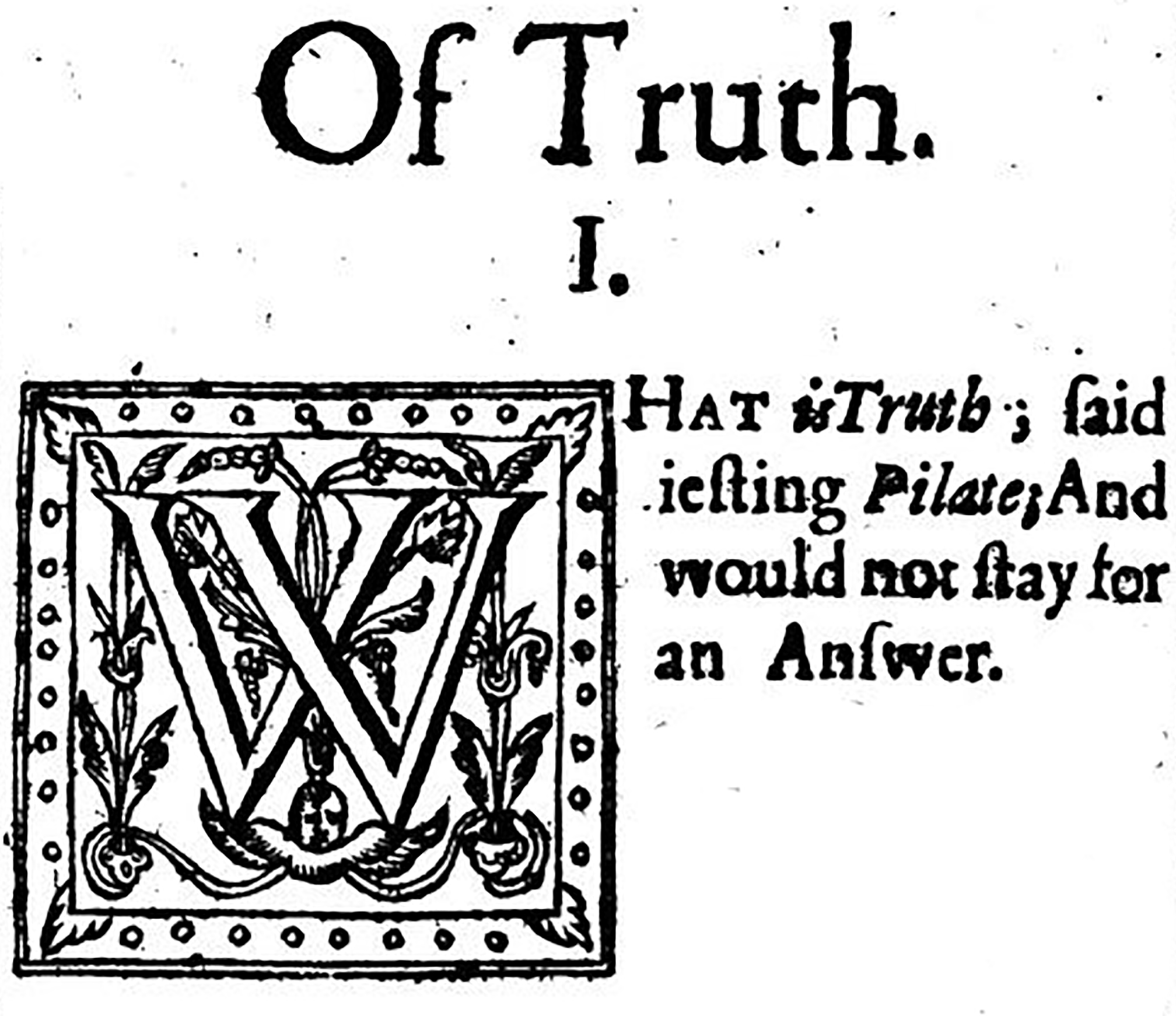
Francis Bacon, “Of Truth.” The essayes or counsels, ciuill and morall, of Francis Lo. Verulam, Viscount St. Alban, 1625.