Author: jonathanmorse
Timepiece, Emerald City
.
.
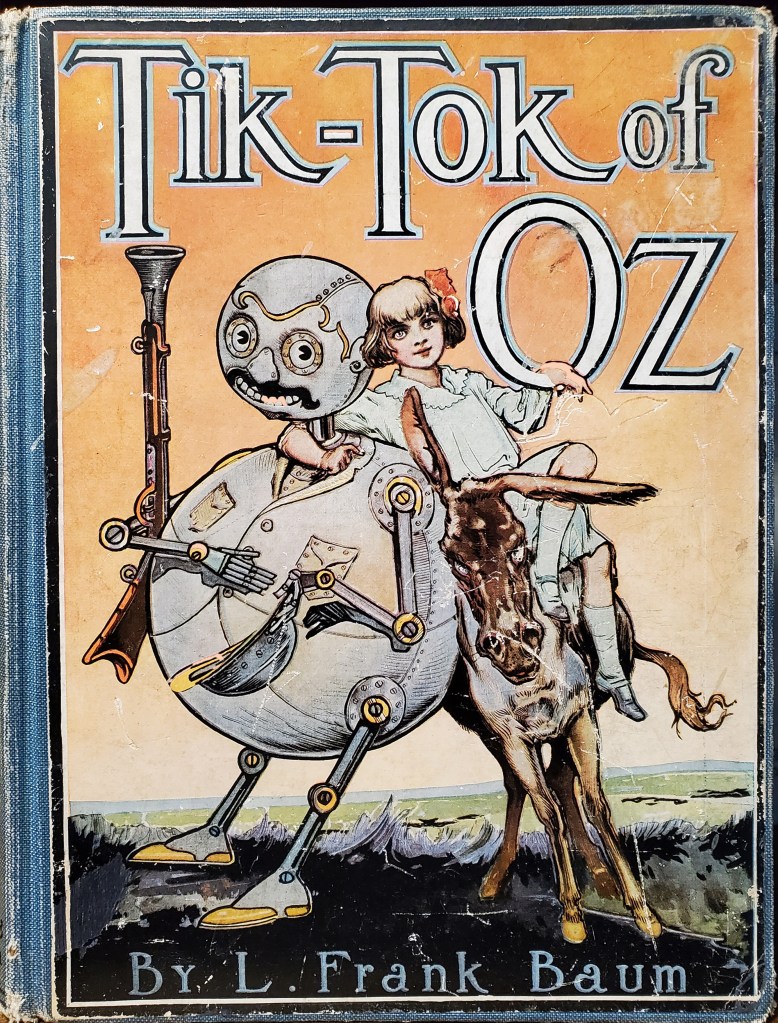
Consider also Frances Cornford’s poem “The Watch.” It goes not tik tok but tok tik.
Classy

Make again: homage to the genius of conservatism

Who are these coming to the sacrifice?

—
At the image’s left and right margins are artifacts from 1906: a gasometer and a carbon-arc street light. Links to more from 1906 about the Lake Michigan resort town of Petoskey and its overnight steamboats to Chicago are at https://jonathanmorse.blog/2025/01/26/cloud-and-rippling-water-nineteen-six/.
And at the image’s center is a woman in a white gown, momentarily aglow in the setting sun. She is to walk through 1906 for a short time further, then lade a night boat with children. That moment is still to come. But now, while the shutter of an onshore camera lies open to receive this image of them all, the children can be seen in passage from your left to your right.
The image charts a transit. Rocked by ripples, the children will lie unmoving in their moving boat as it carries them into the night and then into the morning. Moment by moment on the boat’s bridge, the chronometer will entrain boat, lake, all. Moment by moment one night in 1906, one of the infinitely many ever afters will come to be.
Essentially, every cat is red
Blacksphere

She hydrates

Textures of the jet age
.

Its metal, its doggy fur, its damp felt
Behold

In chapter 42 of Moby-Dick (“The Whiteness of the Whale”), Ishmael perceives at the heart of things a “dumb blankness, full of meaning, in a wide landscape of snows – a colorless, all-color of atheism.” Wallace Steven’s whiteboard covered with snowy words is that landscape’s weather report. One word of its text, however, is not atheistic white but sacerdotal black letter: the word Behold.
—
The black word’s etymology in the OED is Germanic. Old Saxon bihaldan, Old English bihaldan, and modern German behalten all descend from the Germanic healdan, “to hold.” But, says the dictionary, “The application to watching, looking, is confined to English.”
Some of the word’s uncomplicated first sense of mere holding survived as late as the era of Early Modern English. “Euery man behelde the same oppynyon,” says one of the dictionary’s quotations from 1525, and one from 1650 still keeps it close to “held to be”: “It is beheld in Scripture as most solemn and of highest importance.” But by 1609 the possessive behold had begun twisting together with the spectatorial lo in Shakespeare’s Lover’s Complaint – “And Lo behold these tallents of their heir, With twisted mettle amorously empleacht” – and by 1611, in the King James Bible’s “I, behold I, establish my covenant with you,” we can hear the word approach our sense of it through the course of its deflections from possession through contemplation to self-fascination. As it traversed time, the definition of behold altered its course from “I have” to “Watch me have.”
But in chapter 124 of Moby-Dick (“The Needle”), Ahab remagnetized his ship’s compass with vaunting hammerblows and then cried to his watching crew and us watching readers, “Look ye, for yourselves, if Ahab be not lord of the level loadstone! The sun is East, and that compass swears it!” In cringing retrospect, Ishmael was to moralize about “Ahab in all his fatal pride.” But in the white world beheld by the Snow Man, there is neither retrospect nor prospect. There can never be anything to contemplate but a needle, “quivering and vibrating at either end; but at last [settling] to its place” between dumb blankness and black letter.
—
Tom Stoppard, 1937-2025. Because the words he wrote never stopped changing, I happily failed to believe that he would die.