

An American bestseller in 1959 was Robert N. Linscott’s Selected Poems and Letters of Emily Dickinson. In 1955 and 1958 Thomas H. Johnson had published the first scholarly editions of Dickinson in six expensive volumes, and in pre-internet 1959 readers who could afford them could see how much richer those were on the page than the nineteenth-century texts that Linscott was now reselling. But the nineteenth-century texts had always been rich on their own terms, and Linscott’s edition was a bargain.
It was published in Doubleday’s Anchor series of paperbacks which asked to be experienced seriously as both texts and works of graphic art, and its cover portrait of Dickinson was commissioned from Leonard Baskin, the sculptor-painter who had concluded for himself and his massive métier that “Our human frame, our gutted mansion, our enveloping sack of beef and ash is yet a glory.”*
The sermon rhythm of that hymn to an artist’s model’s body is lulling. But does Dickinson lull? Next door to the gutted mansion lies the home of a poet for whom home is not necessarily a glory but necessarily a hiding place: a place to be seen from but not to be seen. Its situation is a big brick house, dark in Baskin and Linscott’s time but painted shiny yellow in Dickinson’s time and again in ours. Within that integument there once hid a poet. Bodily, as she would have been looked at by a sculptor, she wasn’t glorious. Linscott reprinted the words of the letter that Thomas Wentworth Higginson wrote about her to his wife: “A little plain woman with two smooth bands of reddish hair [ . . . ] with no good feature” (JL342a, ML531). One meaning of the count-noun glory is nimbus or halo, but that kind of glory isn’t plain under that circumstance. Try to accommodate anyway, pleads Baskin’s artwork from the jacket of its book. To an ophthalmologist the word accommodation speaks of the work our eyes do for us, and for a time in her life Dickinson was terrified for her eyes. So try one more time to think of her in Baskin’s image.
If your visual field nourishes a crop of some browned paper first made extant to eyes in 1959, that will be what you see. But it won’t see you back. Looking at it, you may see but you won’t have been seen.
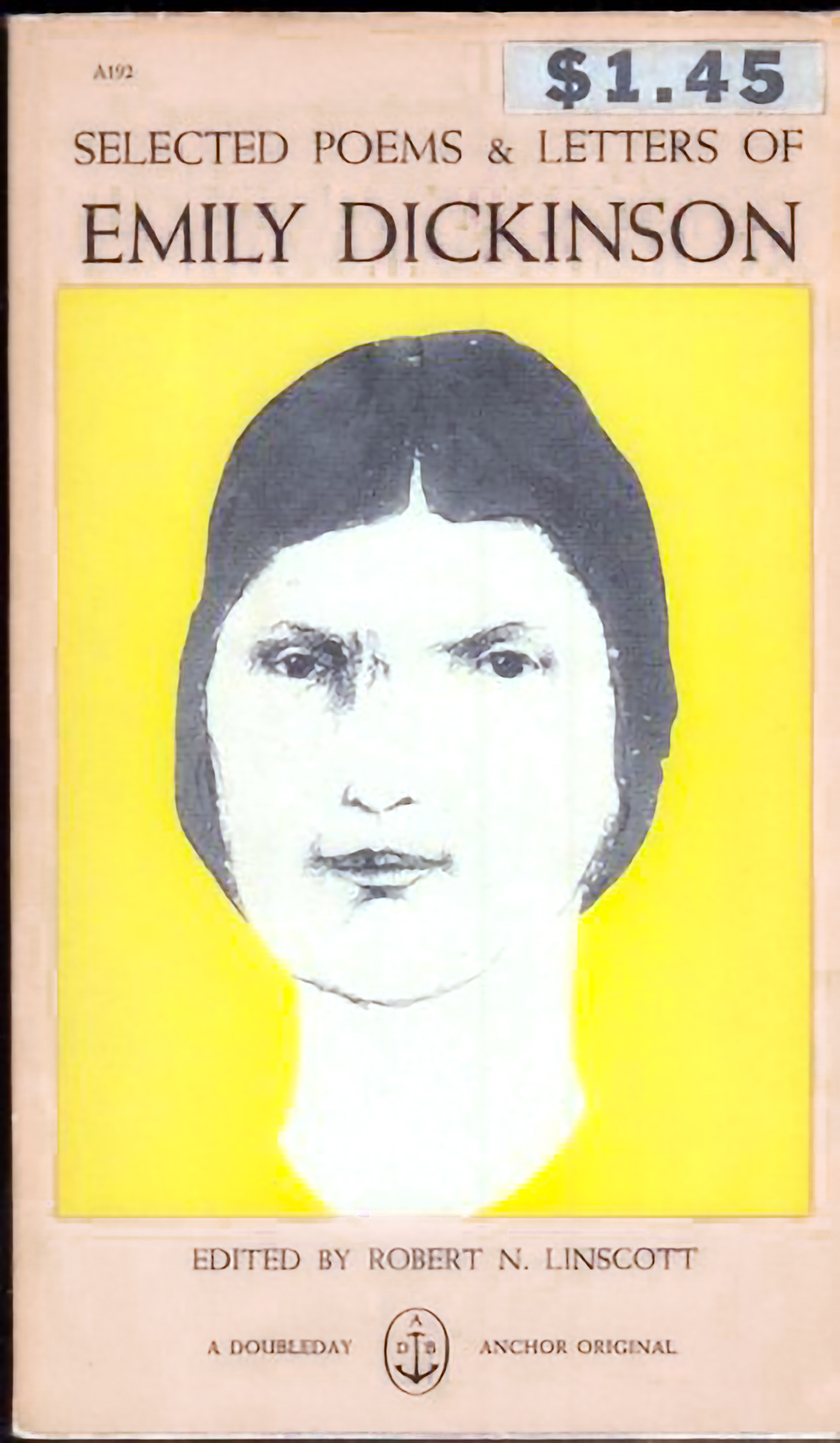
But take the jacket off. Printing-pressed into the woodpulp of their poetry book, its words aren’t a poem; they are only a poem’s jacket. So take it off. Stop trying to see the image.
Instead, let it see you.
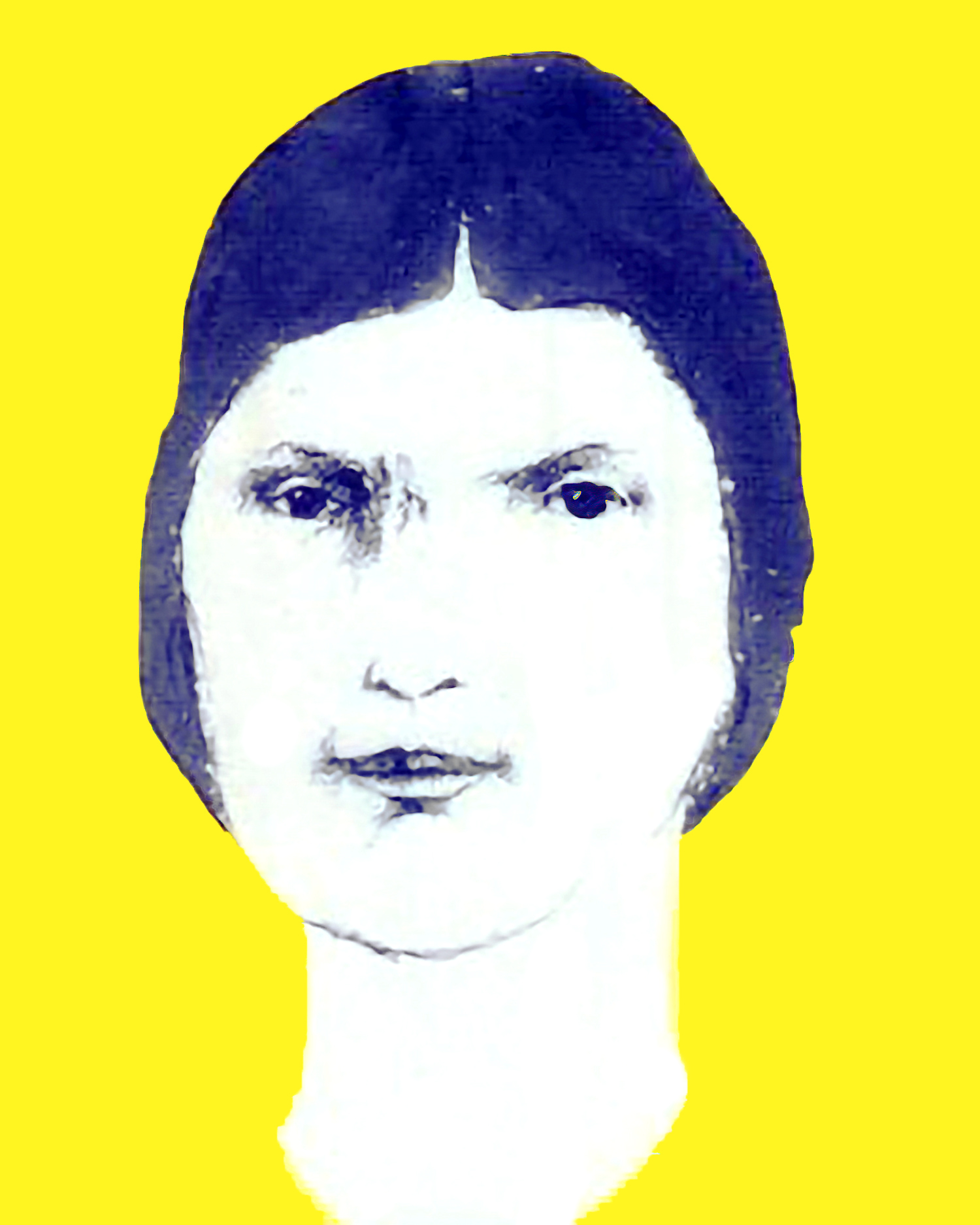
Did that compel you to words?
With the jacket off, were they “I was afraid, because I was naked”?
.
*.The quotation can be found in Baskin’s New York Times obituary at
https://timesmachine.nytimes.com/timesmachine/2000/06/06/614181.html?pageNumber=23