In 1925 the two big volumes of Theodore Dreiser’s novel An American Tragedy were published nineteen years after the occurrence of the one little non-fiction on which they were based: a small-town murder, followed by the murderer’s apprehension, trial, and execution. Bit by bit during the nineteen years, Dreiser laboriously traced the historiographic relationship between himself and those data. For the 1948 World Publishing Company edition of his final transcript, H. L. Mencken explained:
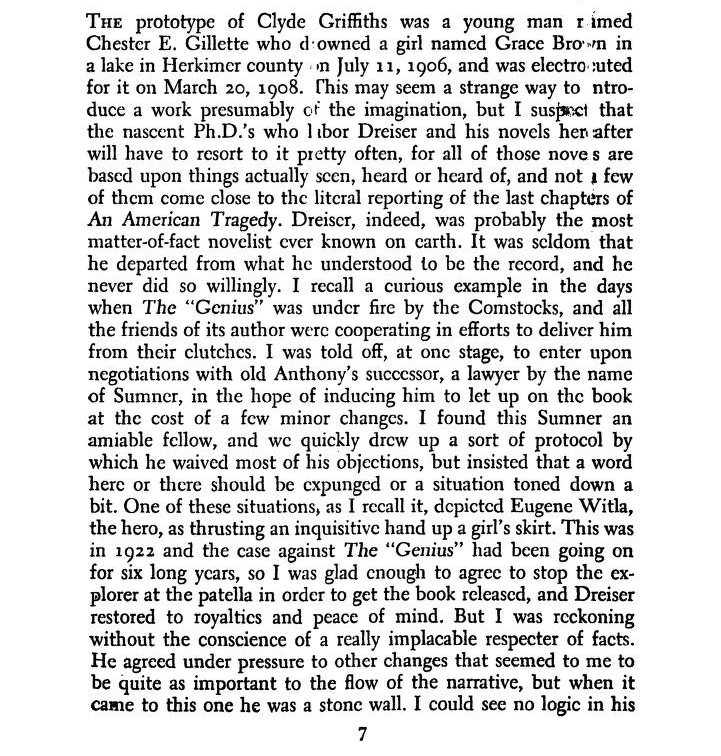
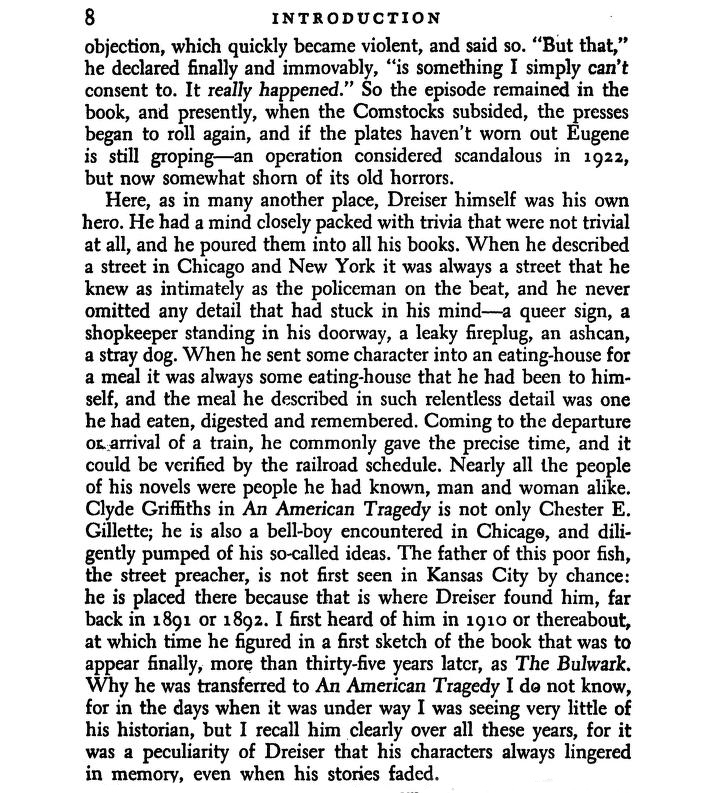
“It really happened”: italicizing Dreiser’s words as if they were foreign, Mencken distanced them from his own. He seemed to assume that he himself wrote under the control of a literary norm, whereas Dreiser’s discipline was something like an autobiographical sociology.
But the source of the language that immersed Dreiser wasn’t entirely under Menckenian genre control. Look below, for instance, at this twinned pair of stories from the Detroit Free Press for Sunday, July 15, 1906. Together they were printed on the front page.
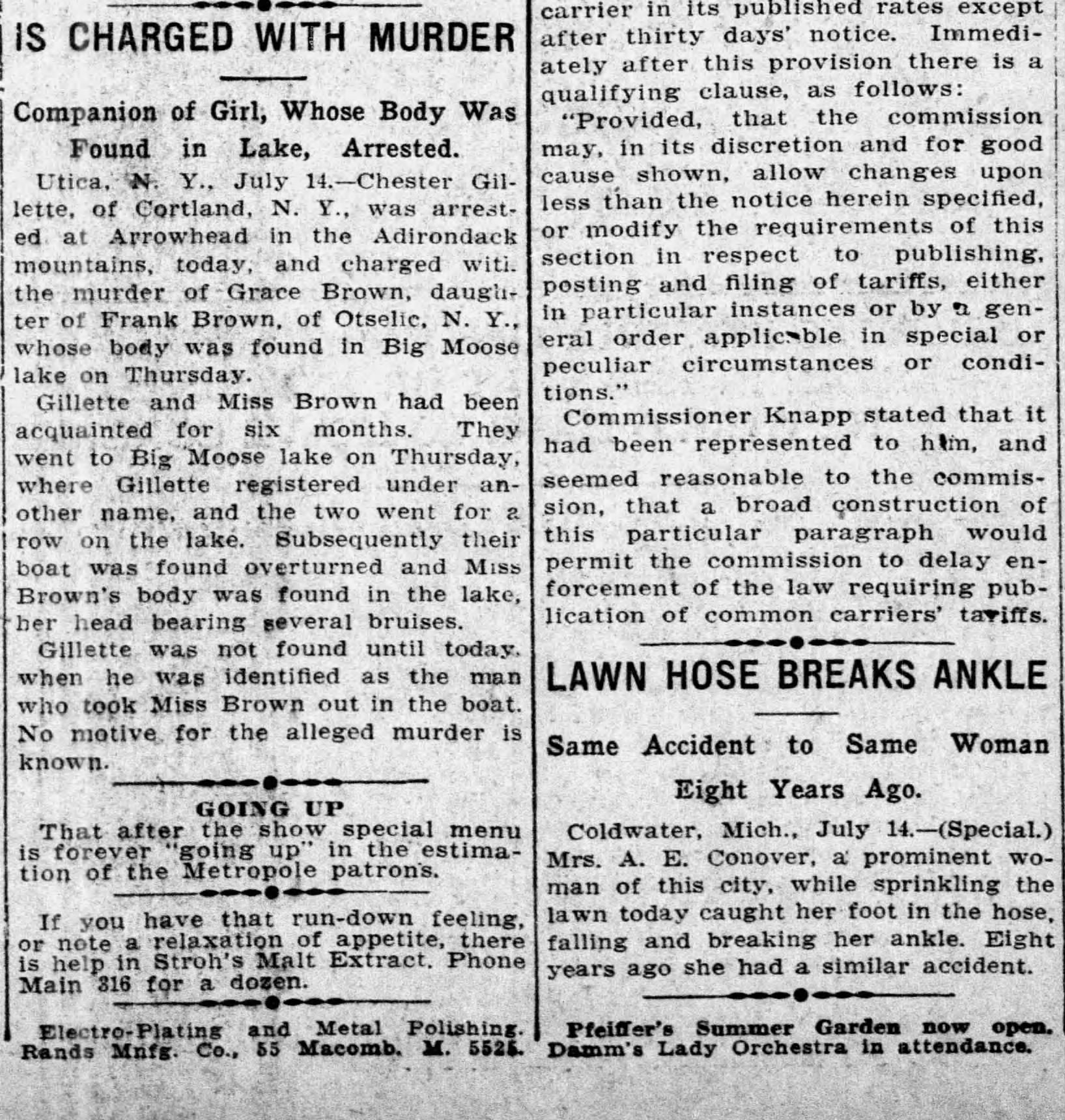
There below the fold they appear side by side: first an early text of the upstate New York drama of Chester Gillette; then, with no space whatever between, the text of a drama closer to Detroit. The Detroit text and only the Detroit text is tagged “(Special).” It also comes to us marked with a time term, “Eight years ago,” which points to the little did she know genre of dramatic irony. A mere six years after Chester’s boat capsized, the Titanic went down.
On a page, such a pairing of texts becomes one more text. Think of the infinitesimal between the liftoff of Ignatz’s brick (Zip) and its touchdown on Krazy’s head (Pow). Think of Ignatz and Krazy’s George Herriman as a geometer writing an equation that reveals that curve through time as one more thing: uniting the mouse, the brick, and the cat, their integrating idea.
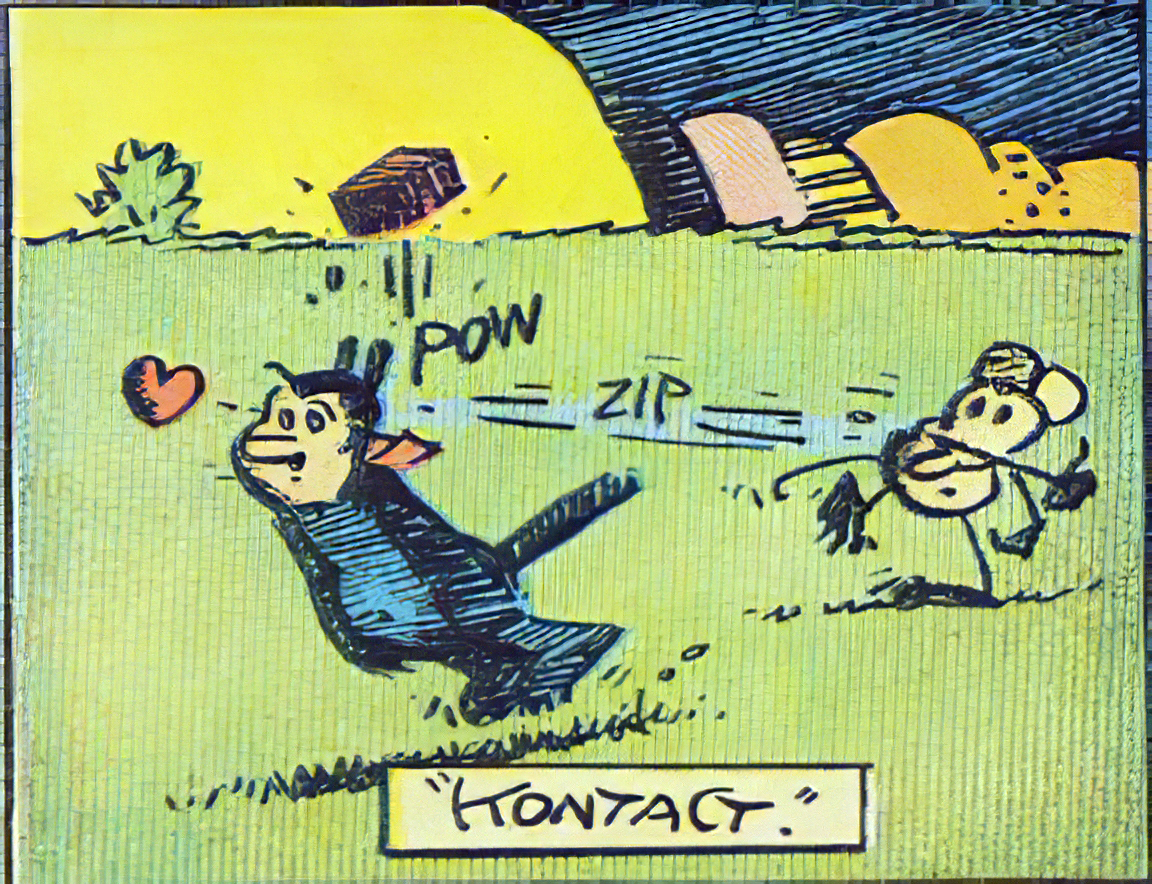
Think of Herriman’s no longer read older contemporary Theodore Dreiser as almost another such artist, but this one the one who wrote thousands of slow words about a trajectory through time without being able to name it. Little did he know: its name was the infinitesimal Zip.